As I was writing this post, I learned that we lost Sinead O'Connor, another one-of-a-kind talent. "Nothing Compares to You" can't be surpassed, whether she sang it or Prince did. There's so much that could be said about Sinead's tragic life, but I'll just honor her music and not dwell on the other stuff.
Since Tony Bennett died last week, I’ve been listening to a lot of the old standards by the great ones: Sinatra and Fitzgerald and Nat King Cole.
I don’t know how I missed the news, but I didn’t realize that Natalie Cole died several years ago.
Her voice was magical.
Natalie carried on her dad’s incredible legacy with an enormous gift of her own. She died at the age of sixty-five from idiopathic pulmonary arterial hypertension which led to heart failure after she received a kidney transplant in 2009.
I always loved this bittersweet duet. They’re both unforgettable.
Before I even begin my strange tale, I want to be sensitive to negative colloquialisms such as “‘Burying the hatchet’.
The use of this term trivializes the ancient peace-making ceremony in which two fighting nations symbolically buried or cached their weapons of war.
Offensive language like this is a result of centuries of violence and continues to perpetuate stereotypes that have real-life impacts on Native communities.
Indigenous Peoples and their cultural traditions are real and deserve respect. They are not historical artifacts, caricatures, or mascots. (radicalcopyeditor.com)
But I don’t know how else to describe what I just found in my garden…an actual buried hatchet.
Look at it!
It’s a joke from the Universe, right?
I have no idea how long it’s been there or how it became buried near a path that leads to some steps to the second level.
I can’t even figure out how, after all this time, it became UNburied enough for me to notice that bright blue handle.
So with deepest respect, I brushed away the dirt around the buried hatchet.
I’m not sure what to do next. Dig it up? Leave it there? Anyone care to hazard a guess about what it means?
When I was little and I’m sure it’s because my mom was a nurse, but I experienced a significantly higher level of attention to hygiene in our day to day life than some. Our joke was that I had as much Lysol in my veins as red blood cells.
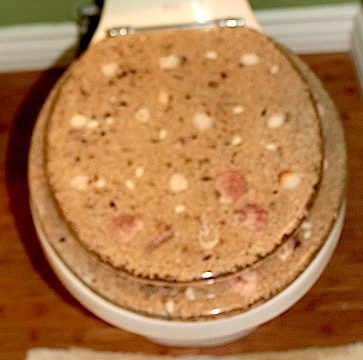
For example, WAY before there were seat covers, whenever we happened to visit a public restroom, my mom taught me how to place three long pieces of toilet paper to cover the seat before I sat down.
She said it was a sanitary barrier against germs. Germs were our nemesis–we must protect ourselves!
Even today, when I’m in a public restroom, whether there are no seat covers or the container is empty, I’ll still channel my mom and use her method to save myself from touching a seat countless others have used. #EWWWW
A while back, Angel Girl and I were at my local park and she needed to use the restroom. There was an empty container where the seat covers should have been, so it was the perfect opportunity to pass on the knowledge from her namesake, exactly the way I was taught,
Later that day while I was making dinner, Angel Girl was in the bathroom and she pulled three long strips of toilet paper and covered the toilet seat before using.
When mom asked her what she was doing, she said “That’s what Grandma does.”
Like a duckling, that angel imprints on all my behaviors, haha.
I heard the chat and rushed in to explain to this brilliant brilliant little human that this method was something we only needed to do for public toilets, the ones that are used by lots of other people, and we didn’t need to do that when we were here at home or at their house.
I’m absolutely sure that the toilet seats in MY home are pristine and reasonably sure that the toilet seats in THEIR home were clean (fingers crossed.)
A little research blew my mind. There seems to be no real scientific or medical reason for covering toilet seats. It was once believed that you could catch a gastrointestinal bug or sexually transmitted disease from a public toilet, but research has proved otherwise; that it’s a practically pointless exercise in sanitation.
Another alternative would be to use an alcohol or bleach wipe, but I don’t always have them with me.
Does anyone else but me (and Angel Girl) still do this? Do you hover or cover?
‘Cos I don’t really care, I still think it’s gross to have any direct contact on a toilet seat where a thousand strangers have been, so I’ll continue to cover.
The word of the day is lalochezia. It’s a noun formed from the Greek lalia (speech) and chezo (to relieve oneself).
Maybe that’s where the term “potty mouth” came from??
I have been known to unleash a hearty string of f-bombs and other expletives. To be completely honest, it is, usually, quite satisfying.
Lalochezia: The use of foul or abusive language to relieve stress or ease pain, emotional release through swearing.
Lalochezia describes that moment when you’re so stressed out and angry that you start spurting out the foulest language possible to relieve stress and pain.
Yup, been there, done that…
I’m sure that a few deep restorative yoga breaths — some vital prana — is probably way more soul healing, but in some cases the venting of specific profanity MIGHT be nearly as invigorating.
I guess I have a ways to go before I enter the transcendent state of nirvana, or as my dad would say, “that’s not very ladylike, Rosebud, and I’m sure you can think of more appropriate language.”
I’m known as the “fixer” because I have a certain amount of success in gluing together broken bits of china, repairing toys, and mending torn clothing…just call me the all around problem solver.
The original Angel Boy recently came to me with a few hand sewing tasks; a ripped seam in his windbreaker, tighten the upper arms of his gardening sleeves where the elastic stretched out so they won’t fall down, (which is super annoying), and sew or iron patches on AB2’s jeans, where he must slide on one knee A LOT,
After I completed my work under the watchful eye of my faithful sidekick, Angel Girl, she rummaged around in her room for something for me to repair (she doesn’t like to be left out of anything) and ran back with a dress that had short-ish butterfly sleeves that didn’t meet her high fashion standards.
“I don’t like this part, Grandma, so you can fix it.”
I took a look at it and figured it wouldn’t be a too difficult job to remove the flutter sleeves and resew the seams, which I did.
It made her very happy.
Later, while mom was giving her a bath, I could hear them chatting about her day. All of a sudden, she said, “I’ve got to give this to Grandma.”
She jumped out of the tub and came running into my room dripping wet, holding a raggedy torn and tattered washcloth full of holes.
“Here you go, Grandma, fix this.”
It must have been washed dozens of times and there really wasn’t any life left and sadly, that worn out fabric was far beyond my capabilities to magically repair, but I love the faith and confidence that angel has in me as the “fixer”, the one she can count on to make things right and restore everything back to the way they should be.
It seemed like he’d live forever even with dementia, but nope. Rest in peace to legendary Anthony Dominick Benedetto, better known as Tony Bennett. He was 96 years old.
Not just an amazing musical artist, did you know that while he was in the Army, he was demoted for having dinner with a black friend?
Did you also know that while in the Army, he hunted Nazis and helped liberate Dachau prisoners?
Did you know that he marched with Martin Luther King and promoted musicians of color in the 1950s and 60s?
He won eighteen Grammy Awards, honors from the United Nations, and the Kennedy Center. Tony found new success later in life when he collaborated with Amy Winehouse and Lady Gaga, recording acclaimed music and touring together,
Before cutting the branch of a tree or removing a flower, tell the spirit of the tree or plant what you are going to do, so that they can withdraw their energy from that place and not feel the cut so strong.
When you go to nature and want to take a stone that was in the river, ask the river keeper if he allows you to take one of his sacred stones.
Honor…
If you have to climb a mountain or make a pilgrimage through the jungle, ask permission from the spirits and guardians of the place. It is very important that you communicate even if you do not feel, do not listen or do not see. Enter with respect to each place, since Nature listens to you, sees you and feels you.
Every movement you make in the microcosm generates a great impact on the macrocosm.
Respect…
Honor life in its many forms and be aware that each being is fulfilling its purpose, nothing was created to fill spaces, everything and everyone is here remembering our mission, remembering who we are and awakening from the sacred dream to return home. Repost from @Sharyl WhiteHawk
Tree connection…
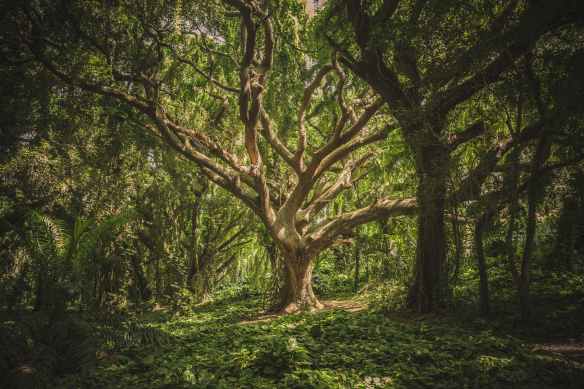
Find a tree that calls to you. As you approach the tree, remember that it is a living, breathing energy. Ask if you may sit with it. You may hear a rustling of the leaves or hear a voice in your head or feel a slight wind brush across you granting permission. Many cultures believe that the shadow of the tree is a portal or entry point into the tree’s realm. Let your intuition guide you in this matter.
Sit with some part of your body touching the tree’s skin, the bark, with your own. Feel your heartbeat as it blends with that of the tree. You may feel the rushing of the sap through the veins of the tree. Match it with the blood flowing in your own veins.
Allow your roots to ground into the earth with the tree’s roots. Reach your arms into the sky as the tree’s branches are reaching. Breathe this experience.
You may wish to just relish this connection or you may have a question or some guidance you are seeking. Allow the tree to respond to you in its own way, staying open to the limitless possibilities of this connection.
You may also wish to commune with the tree’s spirit or the faeries that live in or around this precious being. Also be mindful of the animals and birds that interact with this tree while you are there. Perhaps they have a message for you as well.
I don’t mean the ultra religious definition of doing something good to fulfill one of 631 commandments and I don’t mean BAR/BAT Mitzvah, (which I never did) but doing a mitzvah has also come to express an individual act of human kindness; a good deed.
Here’s the story. A couple days ago, I had a doctor’s appointment . As I walked to the office, I said hello to two people sitting on the curb out in front. They were a bit older than me but looked frail, and the man was in a walker.
There was a wait for the doctor and I chose to sit outside because no one in the waiting room was wearing a mask (except for me) and there was a lot of coughing AND the door was closed. (Yup, I’m still a mask wearer in crowded placed, even if no one else does.)
While I was standing outside on the sidewalk, I chatted with the couple. They told me they had been waiting an hour in the hot sun (we’re having a heat wave) for their Uber. The woman was on the phone trying to find some way to communicate with the company, which is impossible, by the way.
I felt horrible that these older people were left stranded and told them if they were still there when I was finished with my appointment, I’d drive them home as I learned they didn’t live all that far away from the doctor’s office. In case you thought they could take a bus, that’s not an option. Public transportation is horrible in my area.
I went back in the office and could see that the doc was so backed up, I’d probably be forced to wait at least an hour to see her, so I decided to reschedule my visit to next week.
When I left, I saw those poor people were still waiting, still on the phone, looking pretty stressed out. I told them I’d be more than happy to drive them home, which I did.
They were beyond appreciative and repeatedly offered gas money which I declined. They couldn’t believe a total stranger would help them. The man had cancer, was diabetic, in overall poor health, and his wife wasn’t much better.
How could I not help?
It was such a small thing to do for another human; a mitzvah, a helping hand.
I have so much to be grateful for in my life; it felt nice and right to extend a simple and random act of human kindness, not for any reward in this life or the next — for no reason other than I felt like it.
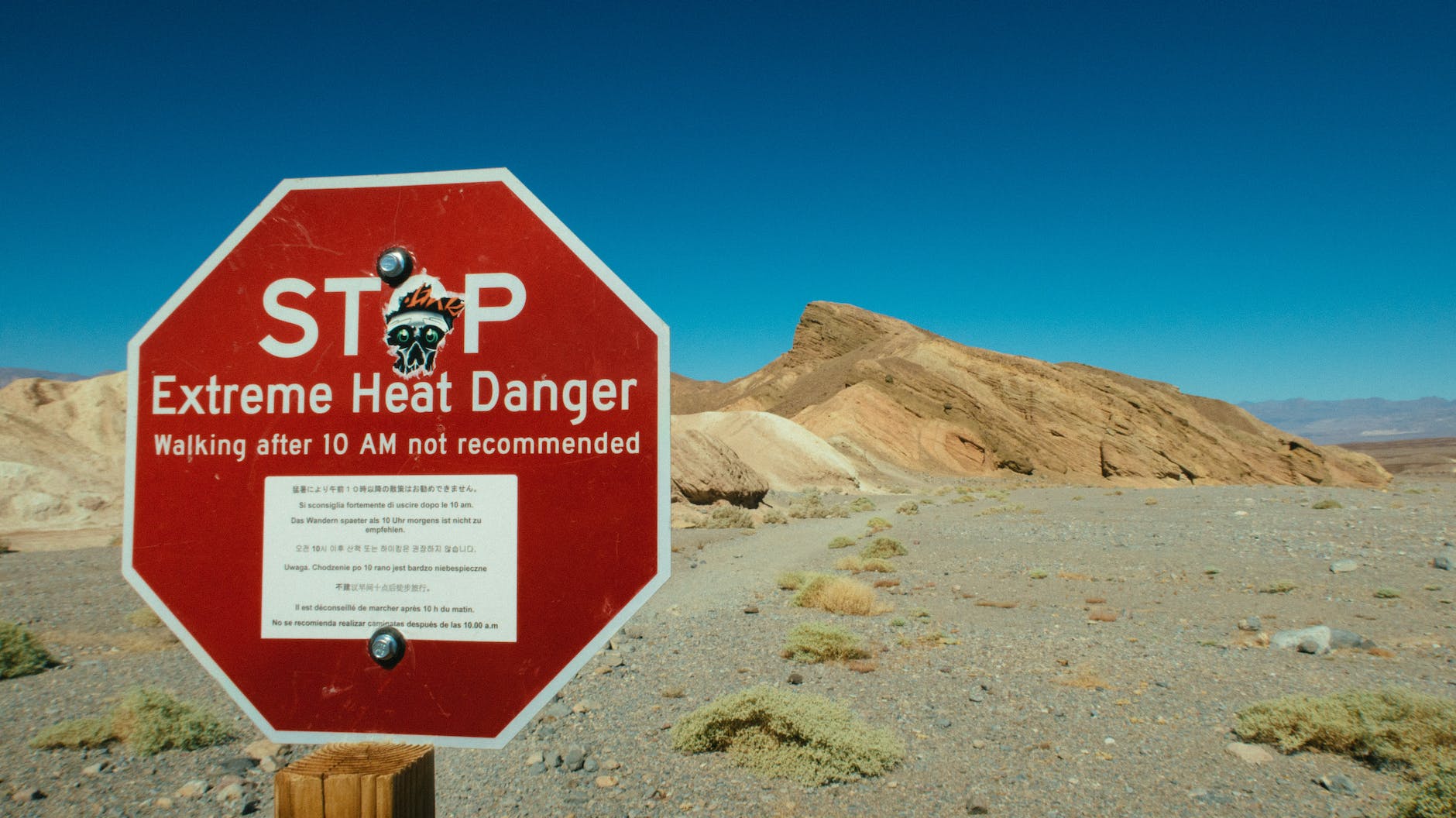
Right now, visitors are flocking to Death Valley National Park to experience the forecasted EXTREME heat.
Death Valley is projected to set a verified world record for the hottest temperature ever reliably recorded, with Furnace Creek expected to reach 131 degrees with a low temperature at night of 101 degrees.
I’ve been to Death Valley a few times. It’s an otherworldly and mysterious experience. It’s a whole mind/body connection, the kind of heat that permeates down to a soulful, cellular level. Along with the magnificent silence, there’s really nothing to compare to desert heat.
Ten thousand years ago, Badwater Basin, the lowest point in North America, was once a hundred-mile long lake. It’s now a vast expanse of salty ground.
When you visit Death Vally, make sure you stop at Artists Palette, a technicolor, kaleidoscopic display of multicolored rock in that makes you feel you’re at an art exhibit.
Of course, as with the rest of our country, there were Indigenous People here before us.
The Timbisha Shoshone Indians lived there for centuries before the first white man entered the valley. They hunted and followed seasonal migrations to harvest pinyon pine nuts and mesquite beans. To them, the land provided everything they needed and many areas were, and are, considered to be sacred places.
I always thank the first people when I camp or hike, no matter where I am.
The shamanic ground markings of Death Valley tend to be found in the more remote parts of this already remote region – probably the reason why any trace of them survives at all. They are ritual and magical features left by long-ago shamans, probably of the ancestral Pima and Shoshone peoples, and they are fragile, so much so that their precise locations are not advertised.
They take various forms – ritual pathways, shrines, vision quest beds, scraped ground markings, strange sinuous lines, and weird patterns of rocks.
Vision quest beds are remote, subtly-marked locations where an Indian brave or shaman would go to spend a solitary vigil seeking a vision – a personal spiritual gift. He would go without food or sleep for perhaps three or four days and nights until the vision came. If it came at all, it would most commonly be in the form of what we would call an auditory hallucination: he would hear a chant or song.
Ritual pathways are probably the rarest of the shamanic features. a loose group of boulders.
The most enigmatic of all the shamanic relics in the valley are markings etched into the hard, sunbaked ground (‘intaglios’) or laid out with small rocks on the surface of the ground (‘petroforms’). Such features are collectively known as ‘geoglyphs’. Both types in Death Valley mainly show meandering, abstract patterns, but a few seem to depict mythical creatures. (Curated from https://www.ancient-origins.net)
If you make it to Death Valley, no matter what season, take more water than you think you’ll need to stay well hydrated!



 Enchanted Seashells | Princess Rosebud