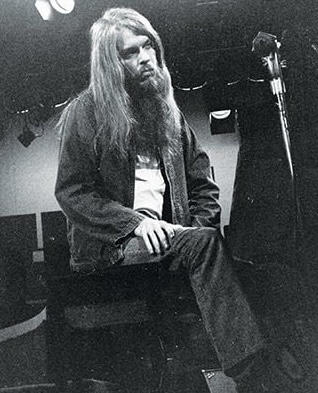
Book Review | Leon Russell: The Master of Space and Time’s Journey Through Rock & Roll History

Written by Bill Janovitz, this nearly 600 page New York Times bestselling biography of Leon Russell, Leon Russell: The Master of Space and Time’s Journey Through Rock & Roll History was a gift from the original Angel Boy.

I don’t think he (or the Angel Kids) quite understand my passionate interest (read obsession) with the one and only Claude Russell Bridges (Leon Russell), but he’s supportive in his own way, although he wouldn’t play “A Song For You” on our piano because he said it had been too long since he tickled the ivories and it might have looked simple to play, but it was a very complex piece of music and he didn’t feel he could do it justice. Or at least that’s the excuse he gave me.

So…this BOOK. It’s comprehensive, it’s respectful, and it delves into areas of Leon’s life that even I didn’t know. Yes, there’s some sex, drugs, and rock and roll, but the overarching theme of Leon’s life and music is LOVE.

The life path that took a child born with cerebral palsy during the Second World War, who overcame his physical challenges to become a classically trained pianist — and was catapulted to the top of the music scene–is inspirational. He was and always will be the Master of Space and Time — a visionary.

One of my favorite quotes from the book is from his friend and fellow musician, Ann Bell:

“One night everybody had gone to bed, and it was about four o’clock in the morning. All of a sudden, I woke up; I could hear him playing. It was a classical piece; he’s in the living room, where he had a piano, and he’s playing this piece that’s forty minutes long, from memory. There was no sheet music. I sat down on the bench, and I didn’t say a word. I just thought, ‘They didn’t understand the depth of his well.’ And when he was done, I was crying. He goes, ‘Girl, what’s wrong witchoo?'”

From the Rock & Roll Hall of Fame:
The definitive New York Times bestselling biography of legendary musician, composer, and performer Leon Russell, who profoudly influenced George Harrison, the Rolling Stones, Eric Clapton, Elton John, Willie Nelson, Tom Petty, and the world of music as a whole. 

Leon Russell is an icon, but somehow is still an underappreciated artist. He is spoken of in tones reserved not just for the most talented musicians, but also for the most complex and fascinating. His career is like a roadmap of music history, often intersecting with rock royalty like Bob Dylan, the Stones, and the Beatles. He started in the Fifties as a teenager touring with Jerry Lee Lewis, going on to play piano on records by such giants as Frank Sinatra, The Beach Boys, and Phil Spector, and on hundreds of classic songs with major recording artists. Leon was Elton John’s idol, and Elton inducted him into the Rock and Roll Hall of Fame in 2011. Leon also gets credit for altering Willie Nelson’s career, giving us the long-haired, pot-friendly Willie we all know and love today.

In his prime, Leon filled stadiums on solo tours, and was an organizer/performer on both Joe Cocker’s revolutionary Mad Dogs and Englishmen tour and George Harrison’s Concert for Bangladesh. Leon also founded Shelter Records in 1969 with producer Denny Cordell, discovering and releasing the debut albums of Tom Petty, the Gap Band, Phoebe Snow, and J.J. Cale. Leon always assembled wildly diverse bands and performances, fostering creative and free atmospheres for musicians to live and work together. He brazenly challenged musical and social barriers. However, Russell also struggled with his demons, including substance abuse, severe depression, and a crippling stage fright that wreaked havoc on his psyche over the long haul and at times seemed to will himself into obscurity. Now, acclaimed author and founding member of Buffalo Tom, Bill Janovitz shines the spotlight on one of the most important music makers of the twentieth century.

I give this book all the stars ⭐⭐⭐⭐⭐⭐ and tophats 🎩🎩🎩🎩🎩🎩🎩🎩

In my opinion, if you don’t know who Leon Russell was, you should, and reading Janovitz’s biography is a good way to learn about him and to be amazed at his musical genius. You’ll understand why he’s referred to as the Master of Space and Time.

Leon Russell and the GAP band on The Midnight Special with Wolfman Jack:
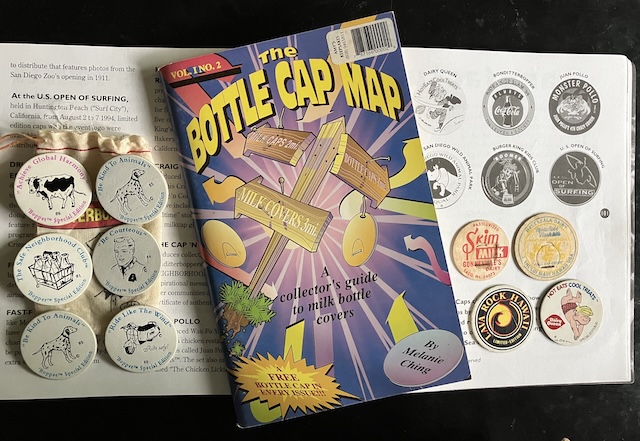
POGs Revival!

Lately it seems that I see POGs popping up everywhere on social media.

Do you remember them?

For a brief, crazy intense moment in the ’90s, POGs and slammers were everywhere. If you grew up during that era, you might remember collecting the colorful cardboard discs, the thrill of slamming your favorite POG stack, and swapping the ones you didn’t want with friends on the playground.

During that frenzied time, I was involved in a business that not only produced POGs (milkcaps) as business promotional giveaways but created a line of them called The Safe Neighborhood Club, complete with an inserted educational booklet. Some of these designs were included in books about POGs.

Photo by Enchanted Seashells

For a time, POGS were even outlawed in a few school districts, that’s how popular they were.

The story of POGs began in Hawaii, where children used caps from Haleakala Dairy’s POG juice (passionfruit-orange-guava) to play a simple flipping game.

Alan Rypinski bought the POG trademark in 1993 and transformed it into a global brand. With the World POG Federation at the helm, POGs exploded into toy aisles and schoolyards, becoming an integral part of ’90s culture. POGman, the game’s cartoon mascot, became as recognizable as the discs themselves. He made millions during the craze but was out of the game when the bubble burst.

By 1997, the POG market had imploded. Oversaturation, school bans, and changing fads pushed the once-beloved game into obscurity. The discs that once sparked heated debates and trades among kids now sat forgotten.

Now, nearly three decades later, whispers of a POG revival are surfacing. Can a nostalgia-driven resurgence bring this playground staple back into the mainstream?

Why Revive POGs Now?

I can’t explain it, but POGs definitely ARE making a comeback, not just as a nostalgic collectible but also with a digital component and a focus on both physical and digital gaming. 

The World Pog Federation launched new physical sets and online games to engage a new generation of players. They are also exploring partnerships and collaborations to expand the POG brand. 

I’ll have to dig around in the garage ‘cos I know I still have a massive collection stored in binders and I can’t wait to show them to the Angels. Maybe they could start it up again at their school; wouldn’t that be awesome?

Further reading:
–Here’s a link to a cool article written just last month about the POG revival:
https://www.belloflostsouls.net/2025/04/dig-up-that-slammer-this-week-were-talking-pogs.html
–Another post from Hawaii: https://www.lanaitoday.com/news/another-chance-to-scoop

Word of The Day: Tsundoku

This is the post I planned for Monday before we had that 5.2 earthquake. Since then, terra firma has been quiet around here, but I did finally install the earthquake warning app to be ready for the next one.

Here’s the word of the day…tsundoku.

I had no idea there was a specific word to describe a pile of unread books.

In Japanese, “tsundoku” means collecting books and letting them pile up, not for neglect, but for the joy of knowing they’re there, full of untold stories.

The word “tsundoku” is a combination of “tsunde-oku” (to let things pile up) and “dokusho” (reading books). 

My professor son has stacks of books all over his house and is guilty of acquiring as many books as he does plants for the garden. Half of them are for teaching and the others are for pleasure, he says. They live sort of near the guy who won a lot of money on Jeopardy, Tom Nissley, and he opened Phinney Books, which is cool. Both of the kids have shelves of books, too, so it runs in the family.

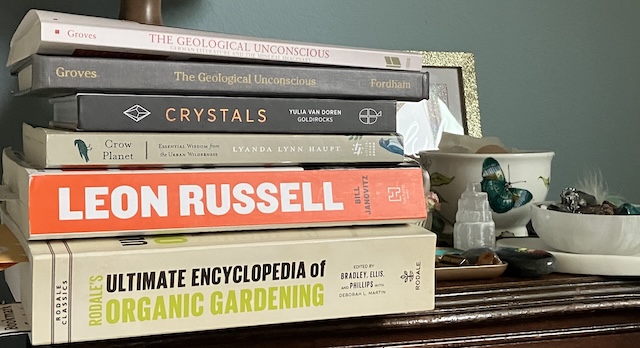
Here’s what’s on my bedside table. I confess that I actually NEVER read AB’s book in its entirety, but since I proofed the first draft, there’s a bit of me in there somewhere. Of course there’s Leon (I know, I’m so predictable) and gifted books about crystals and gardening. I didn’t include all my chick lit books because they’re immediately devoured. I get most of those secondhand from DIL because we enjoy the same authors. She’s a neuroscientist and those reads are a way for her brainy brain to unwind.

My stack of ladies-in-waiting.

What titles are in your tsundoku?

What I’m Reading: Leon Russell In His Own Words

“Once in a lifetime across your lifeline crosses an energy like no other. This is Leon Russell to me.”
Gary Busey, musician, actor, long-time friend of the Master of Space and Time.

It’s a sunny and warm November day here in SoCal, a perfect time to sit outside on the deck and read Leon Russell In His Own Words.

It’s not a huge book but any light shed on the mysterious, charismatic, and enigmatic MOSAT is appreciated.

It features memories by and about LR from his childhood, high school bands, session work in Los Angeles, and some of his tours.

I’m always amazed at the sheer numbers of records that benefited from Leon’s words, arrangements, and productions. He was a legendary musician, composer, and performer whose musical influence can’t be overstated.

Leon Russell was a one-of-a-kind human; I don’t think we’re likely to experience that kind of genius in several lifetimes.

This little book was enjoyable and informative; I totally recommend!

Now I’m waiting for my Christmas/Hanukkah gift: another book about Leon Russell ; this one is written by Bill Janovitz: Leon Russell: The Master of Space and Time’s Journey Through Rock & Roll History

Some people simply defy stereotypes:

Divine Transmutation

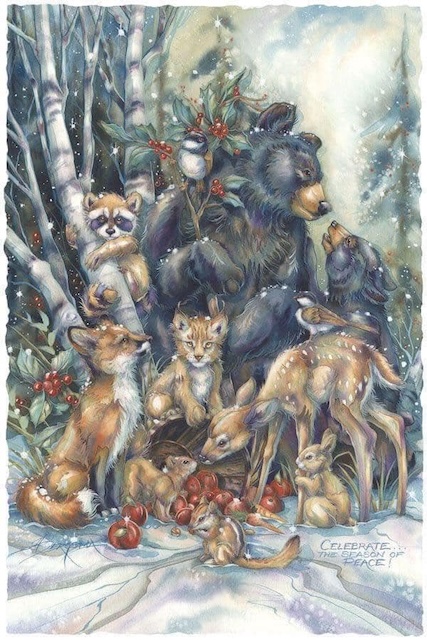
“Once every people in the world believed that trees were divine, and could take a human or grotesque shape and dance among the shadows; and that deer, and ravens and foxes, and wolves and bears, and clouds and pools, almost all things under the sun and moon, and the sun and moon, were not less divine and changeable.” — W.B. Yeats

Artist~ Jody Bergsma

A Wonderful Day

This is a wonderful day.
I have never seen this one before.
~ Maya Angelou

Sunrise photo by Enchanted Seashells

Irreplaceable

Has everyone read The Little Prince? It’s packed full of wisdom, like this quote from the book:

For nothing, in truth, can replace a lost companion. Old friends cannot be created out of hand. Nothing can match the treasure of shared memories, so many bad times endured together, so many quarrels, reconciliations, heartfelt impulses. Friendships like that cannot be reconstructed.  
The Little Prince by Antoine de Saint-Exupéry

The Little Prince visits various planets, including Earth, and addresses themes of loneliness, friendship, love, and loss. The story of the prince and his rose is a parable about the nature of enduring love.

I only recently learned that the same month that the book was published, Saint-Exupéry joined the Free French Air Force, and in July 1944 he disappeared while flying a reconnaissance mission, reportedly shot down. Isn’t that unbelievably sad?

Art by Andrea Hrnjak

What I’m Reading: Crow Planet

Because my human family understands the special love I feel for my crow family (I refer to them as my cousins), I was gifted Crow Planet: Essential Wisdom from the Urban Wilderness by Lyanda Lynn Haupt.

These are some of my garden “cousins” who greet me in the morning.


“Grandma, I know you love crows so much, but do you think they’re a little scary?”

Angel Boy asked that question because the crows in their neighborhood seem to know when they’re eating outside in the garden, and perch in the trees and on the garage to patiently wait for fallen morsels.

“I’m not afraid of them because I don’t believe they would ever cause me harm. The crows who visit me at home leave shiny little gifts. These guys simply want to share your dinner.”

I didn’t think it was the right time to tell him that if he tried – he could get them to eat out of his hand — but one day I might.

Crows are considered to be among the most intelligent animals in the world with brains that are similar in size to humans and make up almost two percent of their body mass. They’re known for their ability to solve complex problems, and some say they have the intelligence of a two to seven-year-old child.

Haupt is a Seattle-based author, naturalist, and speaker. “My work explores the beautiful, complicated connections between humans and the wild, natural world.” She has created and directed educational programs for Seattle Audubon, worked in raptor rehabilitation in Vermont, and as a seabird researcher for the U.S. Fish and Wildlife Service in the remote tropical Pacific. (Curated from https://www.lyandalynnhaupt.com/)

If you love crows like I do, you will LOVE Crow Planet.

What are YOU reading now?

Interesting Facts About Germany: University of Göttingen (In English and German)

My son spent his junior year abroad at the University of Göttingen but never knew about some of its important historical connections.

Randomly, I found out about an interesting educator, Emmy Noether, from the early 1900s.

“What will our soldiers think when they return to the university and find that they are required to learn at the feet of a woman?”

That was the response of more than one (male) faculty member at the idea of Emmy Noether joining the University of Göttingen to teach mathematics in 1915.

Instead of receiving the title she deserved, Emmy spent years teaching courses, often under the name of a male faculty member.

The official hierarchy dictated that it was HIS course and she was an assistant. More egregiously, she wasn’t paid for her work; she relied on the support of her family to survive.

In 1919 she was permitted to officially teach and began receiving a small salary in 1922.

As a teacher, Emmy was known to speak loud and fast, for being generous and thoughtful, and genuinely cared about her students.

In addition to being an excellent teacher, she also made numerous significant contributions to research in mathematics and physics.

The other interesting fact about Göttingen is something I wasn’t aware of until I watched the Academy Award winning film Oppenheimer.

In 1926, the physicist J. Robert Oppenheimer left Cambridge for the University of Göttingen to study under Max Born. Göttingen was one of the world’s leading centers for theoretical physics. (I didn’t know that fact, either!)

World War II interrupted the work and lives of most American physicists. In 1942, Oppenheimer was appointed to the Manhattan Project, code name for the project formed to develop an atomic bomb.

My son attended UofG to further his advanced degrees in Germanic languages and literatures, not the world of science.

Because I am THAT KIND OF MOM, I visited him while he was in Germany and spent a week there. I actually stayed in a visitors room in his dorm. This structure was built sometime during the cold war era, at least I think it was, because it was DISMAL and gray and cold and unwelcoming and the bathrooms were hardly luxurious – but it was fun to see the original Angel Boy in action and meet his classmates and friends.

Best of all, I got to be the obnoxiously proud mom as we did a lot of sight seeing and he was able to use his fluent German language skills all over the country.

Except for (and because of) the snowy blizzard debacle, it was a memorable Germany adventure.

A big thank you to Herr Professor Angel Boy for helping me properly translate my words.

Ein großes Dankeschön an Herrn Professor Angel Boy, der mir geholfen hat, meine Worte richtig zu übersetzen.
________________________________________________________________

Interessante Fakten über Deutschland auf Deutsch: Universität Göttingen

Mein Sohn verbrachte sein erstes Studienjahr im Ausland an der Universität Göttingen, wusste aber nichts über einige der wichtigen historischen Zusammenhänge.

Zufällig erfuhr ich von einer interessanten Pädagogin, Emmy Noether, aus dem frühen 20. Jahrhundert.

„Was werden unsere Soldaten denken, wenn sie an die Universität zurückkehren und feststellen, dass sie zu Füßen einer Frau lernen müssen?“

Das war die Reaktion mehrerer (männlicher) Fakultätsmitglieder auf die Idee, dass Emmy Noether 1915 an die Universität Göttingen kam, um dort Mathematik zu lehren.

Anstatt den Titel zu erhalten, den sie verdiente, unterrichtete Emmy jahrelang Kurse, oft unter dem Namen eines männlichen Fakultätsmitglieds.

Die offizielle Hierarchie schrieb vor, dass es SEIN Kurs war und sie eine Assistentin war. Noch schlimmer war, dass sie für ihre Arbeit nicht bezahlt wurde; Sie war auf die Unterstützung ihrer Familie angewiesen, um zu überleben.

1919 erhielt sie offiziell die Erlaubnis zu unterrichten und ab 1922 erhielt sie ein kleines Gehalt.

Als Lehrerin war Emmy dafür bekannt, laut und schnell zu sprechen, großzügig und rücksichtsvoll zu sein und sich aufrichtig um ihre Schüler zu kümmern.

Sie war nicht nur eine hervorragende Lehrerin, sondern leistete auch zahlreiche bedeutende Beiträge zur Forschung in Mathematik und Physik.

Die andere interessante Tatsache über Göttingen war mir erst bewusst, als ich den Oscar-prämierten Film Oppenheimer sah.

1926 verließ der Physiker J. Robert Oppenheimer Cambridge und ging an die Universität Göttingen, um bei Max Born zu studieren. Göttingen war eines der weltweit führenden Zentren für theoretische Physik. (Das wusste ich auch nicht!)

Der Zweite Weltkrieg unterbrach die Arbeit und das Leben der meisten amerikanischen Physiker. Im Jahr 1942 wurde Oppenheimer in das Manhattan-Projekt berufen, Codename für das Projekt zur Entwicklung einer Atombombe.

Mein Sohn besuchte die UofG, um seine weiterführenden Abschlüsse in Germanistik zu machen, nicht in der Welt der Naturwissenschaften.

Weil ich so eine Art Mutter bin, habe ich ihn besucht, als er in Deutschland war, und eine Woche dort verbracht. Ich wohnte tatsächlich in einem Besucherzimmer in seinem Wohnheim. Dieses Gebäude wurde irgendwann in der Zeit des Kalten Krieges erbaut, zumindest glaube ich, dass es so war, weil es trostlos und grau und kalt und abweisend war und die Badezimmer kaum luxuriös waren – aber es hat Spaß gemacht, seine Freunde zu treffen und den ursprünglichen Angel Boy in Aktion zu sehen.

Das Beste von allem war, dass ich die unglaublich stolze Mutter sein durfte, da wir viel Sightseeing machten und er seine fließenden Deutschkenntnisse im ganzen Land anwenden konnte.

Abgesehen (und wegen) des Schneesturm-Debakels war es ein unvergessliches Deutschland-Abenteuer.

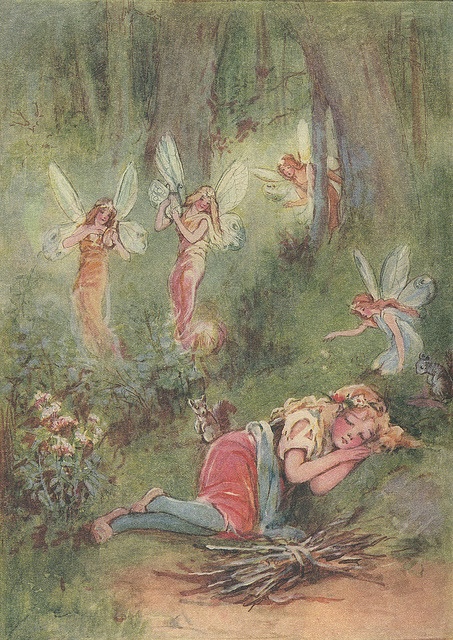
Sleeping in the Forest

The full moon and lunar eclipse again wreaked havoc with my sleep – I woke up several times seemingly for no reason, but I looked out the window and said “goodnight, moon“, as if I were in Margaret Wise Brown’s classic book where the bunny says goodnight to various objects and creatures before drifting off to sleep. 

I thought the earth remembered me,
she took me back so tenderly,
arranging her dark skirts, her pockets
full of lichens and seeds.
I slept as never before, a stone on the river bed,
nothing between me and the white fire of the stars
but my thoughts, and they floated light as moths
among the branches of the perfect trees.
All night I heard the small kingdoms
breathing around me, the insects,
and the birds who do their work in the darkness.
All night I rose and fell, as if in water,
grappling with a luminous doom. By morning
I had vanished at least a dozen times
into something better. –Mary Oliver

Cinderella by Frances Brundage