When Your Gallbladder Isn’t Your Friend

GALL…

Of all the unmitigated gall!” “He sure has a lot of gall!”

Have you heard that? My mom used to say it about certain people. I don’t think it’s used very much now, but it still has a relevant place in our language.

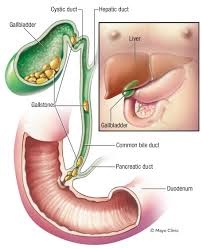
Gall is a digestive juice secreted by the liver, stored in the gallbladder, and aids in the digestion of fats. vocabulary.com

If someone has gall, they’re irritating. In fact, as a verb, gall means “to irritate” like new tight jeans that gall your thighs. Gall is “bile,” too, like what’s in a gall bladder. Back in the days of Hippocrates, if the four humors of the body were out of whack, it affected your spirits. If you had too much bile, or gall, then you’d be aggressive or depressed. It’s also a noun for “deep feeling of ill will.”

I’m reminded of this because I’m on my way for a yearly ultrasound to check on the status of a growth on my gallbladder.

Prior to my first ultrasound, I experienced right upper quadrant abdominal pain and that’s how I initially learned about the cyst/polyp.

Adenomyomatosis: An abnormal overgrowth of the gallbladder lining that forms cysts in the gallbladder wall. Scientists aren’t sure why it occurs, but it isn’t usually harmful.

So far (knock on wood), it hasn’t really changed size enough to cause alarm, but my doctor asked me why I haven’t had it removed. She thought it was easier to have it removed than to monitor it on a yearly basis.

No one had suggested that before, especially since it hasn’t reached the size protocol for removal. I’m also thinking that if I did that, it could grow back and anything invasive seems to increase the probability of creating something new and different and perhaps even malignant.

I told her my prudent course of action is to continue to get a yearly ultrasound and if stays the same, to continue to do nothing. I don’t believe in slicing and dicing my body parts unless it’s a thousand percent medically necessary.

Waiting for the ultrasound report is always stressful and I hope when it finally gets emailed to me, it’ll reveal no significant change in size or location to the little cyst valiantly clinging to my gallbladder wall — which would be great news and I’ll be able to stop worrying about it — until next year.

Wetiko: Disease of The Soul

Paul Levy writes: “Wetiko is a virus of the mind that cultivates and feeds on fear and separation.”

I lost a few followers here on WordPress since the US presidential election. I guess some people don’t like my absolute hatred for that orange POS, but it’s never been a secret how I feel about repression and criminal behavior and loss of reproductive rights, oh well…I’m grateful they chose to delete themselves. We are not the same.

Along with the results of the election where the decent candidate, Kamala Harris, conceded her apparent loss, there’s been an uptick in chat about wetiko. I’ve written about it before but now theres a resurgence of interest in anything that could possibly explain the toxic world we inhabit.

Wetiko is a disease of the soul, a parasite of the mind, currently being acted out en masse on the world stage via a collective psychosis of titanic proportions.

This mind-virus-which Native Americans have called “wetiko”-covertly operates through the unconscious blind spots in the human psyche, rendering people oblivious to their own madness and compelling them to act against their own best interests.

Drawing on insights from Jungian psychology, shamanism, alchemy, spiritual wisdom traditions, and personal experience, author Paul Levy shows us that hidden within the venom of wetiko is its own antidote, which once recognized can help us wake up and bring sanity back to our society.

A Tibetan Buddhist practitioner for more than thirty years, he has intimately studied with some of the greatest spiritual masters of Tibet and Burma.

“For millennia, humanity has struggled to understand the manifestation of evil in our world. In this regard Dispelling Wetiko is an extraordinary book, and author Paul Levy has made a great contribution to our understanding of the evil that is happening in our world today, as well as who and what we are.” says Hank Wesselman PhD., anthropologist and author of The Bowl of Light Previously reviewed here: https://enchantedseashells.com/2022/12/15/what-im-reading-the-bowl-of-light/

Wetiko in a Nutshell

by Paul Levy, author of Wetiko: Healing the Mind-Virus That Plagues Our World

A contagious psycho-spiritual disease of the soul is currently being acted out en masse on the world stage via an insidious collective psychosis of titanic proportions. This mind-virus—which Native Americans have called “wetiko”—covertly operates through the unconscious blind spots in the human psyche, rendering people oblivious to their own madness and compelling them to act against their own best interests. Wetiko is a psychosis in the true sense of the word, “a sickness of the spirit.” Wetiko covertly influences our perceptions so as to act itself out through us while simultaneously hiding itself from being seen.

Wetiko bewitches our consciousness so that we become blind to the underlying, assumed viewpoint through which we perceive, conjure up, and give meaning to our experience of both the world and ourselves. This psychic virus can be thought of as the “bug” in “the system” that informs and animates the madness that is playing out in our lives, both individually and collectively, on the world stage.

Before being able to treat this sickness that has infected us all, we have to snap out of our denial, see the disease, acknowledge it, name it, and try to understand how it operates so as to ascertain how to deal with it—this is what my book Wetiko is all about.

The Normalization of Wetiko

A few years ago I ran into a friend whom I hadn’t seen for a while. He asked me what I had been up to. I answered that I was writing about the collective psychosis that our species had fallen into. His response was telling. He asked me what made me think there was a collective psychosis going on. His question left me speechless; I literally didn’t know how to respond. What made him think there wasn’t a collective psychosis going on, I wondered. Could he give me one piece of evidence? Our collective madness had become so normalized that most people—my friend was extremely bright, by the way—didn’t even notice.

Many of us have become conditioned to thinking that if we were in a middle of a collective psychosis it would mean that people would be doing all sorts of “crazy” things such as running around naked and screaming, for instance. This ingrained idea, however, gets in the way of recognizing the very real collective insanity in which all of us are—both passively and actively—participating. If we want to envision what a collective psychosis could actually look like, it might be a real eye-opener to realize it would look exactly like what is happening right now in our world.

What Is Wetiko Really?

Wetiko is a cannibalizing force driven by insatiable greed, appetite without satisfaction, consumption as an end in itself, and war for its own sake, against other tribes, species, and nature, and even against the individual’s own humanity. It is a disease of the soul, and being a disease of the soul, we all potentially have wetiko, as it pervades and “in-forms” the underlying field of consciousness. Any one of us at any moment can fall into our unconscious and unwittingly become an instrument for the evil of wetiko to act itself out through us and incarnate in our world. If we see someone who seems to be taken over by wetiko and we think they have the disease and we don’t, in seeing them as separate we have fallen under the spell of the virus ourselves.

Wetiko induces in us a proclivity to see the source of our own pathology outside of ourselves—existing in “the other.” Wetiko feeds off of polarization and fear—and terror—of “the other.” Seeing the world through a wetiko-inspired lens of separation/otherness enlivens what Jung calls “the God of Terror who dwells in the human soul,” and simultaneously plays itself out both within our soul and in the world at large. Wetiko subversively turns our “genius” for reality-creation against us in such a way that we become bewitched by the projective tendencies of our own mind.

Falling under wetiko’s spell, we become entranced by our own intrinsic gifts and talents for dreaming up our world in a way that not only doesn’t serve us, but rather is put at the service of wetiko (whose agenda is contrary to our own). Our creativity then boomerangs against us such that we hypnotize ourselves with our creative genius, which cripples our evolutionary potential. To the extent we are unconsciously possessed by the spirit of wetiko, it is as if a psychic tapeworm or parasite has taken over our brain and tricked us, its host, into thinking we are feeding and empowering ourselves while we are actually nourishing the parasite (a process which will ultimately kill its host—us).

In wetiko disease, something that is not us surreptitiously, beneath our conscious awareness, takes the place of and plays the role of who we actually are. Shape-shifting so as to cloak itself in our form, this mercurial predator gets under our skin and “puts us on” as a disguise. Miming ourselves, we become a copy, a false duplicate of our true selves. We are then truly playing out a real version of the imposter syndrome.

The Sickness of Exploitation

Wetiko is powerless to control our true nature, but it can control and manipulate this false identity that it sets up within us. When we fall under the sway of wetiko’s illusion, we simultaneously identify with who we are not, while dissociating from and forgetting who we actually are—giving away our power, not to mention ourselves, in the process.

Disconnecting from our own intrinsic agency, we open ourselves to be used, manipulated, and exploited by outside forces. Indigenous author Jack Forbes, who wrote the classic book about wetiko entitled Columbus and Other Cannibals, refers to wetiko as “the sickness of exploitation.” Wetiko can be conceived of as being an evil, cannibalistic, vampiric spirit that inspires people under its sway to take and consume another’s resources and life-force energy solely for their own profit, without giving anything of value back from their own lives. Wetiko thus violates the sacred law of reciprocity in both human affairs and the natural world as a whole.

The main channel of wetiko’s transmission is relational. It exists through our relationships with ourselves, each other, and the world at large. Like a vampire that can’t stand the light of day, the wetiko virus can’t stand to be illumined. However, in seeing how it covertly operates through our own consciousness, we take away its seeming independence, autonomy, and power over us, while at the same time empowering ourselves. The way the vampiric wetiko covertly operates within the human psyche is mirrored by the way it works in the outside world.

Jung never tired of warning us that the greatest danger threatening humanity today is the possibility that millions—even billions— of us can fall into our unconscious together in a collective psychosis, reinforcing each other’s madness in such a way that we become unwittingly complicit in creating our own destruction. When this occurs, humanity finds itself in a situation where we are confronted with—and battered by—the primal, primordial, and elemental forces of our own psyche.

The Internal Origins of Wetiko

The most depraved part of falling under the thrall of wetiko is that, ultimately speaking, it involves the assent of our own free will; no one other than ourselves is ultimately responsible for our situation. There is no objective entity called wetiko that exists outside of ourselves that can steal our soul—the dreamed-up phenomenon of wetiko tricks us into giving it away ourselves.

People under the sway of wetiko are implicated in and willingly subscribe to their own enslavement. They do this to the point that when offered the way out of the comfort of their prison they oftentimes react violently. They symbolically—and sometimes literally—try to kill the messenger who is showing them the path to freedom. Ultimately speaking, in wetiko disease we are not being infected by a physical, objectively existing virus outside of ourselves. Rather, the origin and genesis of the wetiko psychosis is endogenous; its roots are to be found within the human psyche. The fact that wetiko is the expression of something inside of us means that the cure for wetiko is likewise within us.

If we don’t understand that our current world crisis has its roots within and is an expression of the human psyche, we are doomed to unconsciously repeat and continually recreate endless suffering and destruction in increasingly amplified forms, as if we are having a recurring nightmare. In my language, the inner situation within ourselves is getting “dreamed up” into materialized form in, through, and as the world.

In waking life we are continually dreaming right beneath the threshold of consciousness, especially when we are under the influence of our unconscious complexes. In other words, when we are “under the influence” of our activated unconscious, we will unknowingly recreate our very inner landscape via the medium of the outside world. What can be more dreamlike than that?

Recognizing the correlation between the inner and the outer, between the micro and the macro, is the doorway into being able to see wetiko and wake up to the dreamlike nature that wetiko is simultaneously hiding and revealing depending on our point of view and level of awareness. Recognizing the connection between what is happening out in the world with what is taking place within our minds becomes a channel or secret doorway that leads beyond our merely personal psychological issues, empowering us to deal with the essential problem of our time.

To “heal wetiko,” which refers to a concept describing a deep-seated psychological pattern of greed, selfishness, and destructive behavior, according to author Paul Levy, you can focus on practices like increased self-awareness, shadow work, mindfulness, cultivating gratitude, connecting with community, and actively working to counter destructive behaviors by integrating your unconscious aspects and projecting positive intentions into the world; essentially, by consciously choosing compassion and generosity over self-serving actions. 

https://www.innertraditions.com/blog/wetiko-in-a-nutshell

Key aspects of healing wetiko:

  • Recognize and acknowledge wetiko within yourself: Pay attention to your thoughts, emotions, and behaviors where you might be acting out of greed, envy, or a desire to exploit others. 
  • Shadow work: Explore and integrate your shadow aspects, the parts of yourself that you might disown or project onto others. 
  • Mindfulness practice: Regularly practice mindfulness to observe your thoughts and emotions without judgment, allowing you to catch wetiko tendencies early on. 
  • Inner work through therapy or spiritual practices: Seek support from a therapist or engage in spiritual practices that encourage self-reflection and healing. 
  • Cultivate gratitude: Focus on the positive aspects of your life and express gratitude to shift your perspective away from negativity. 
  • Compassion and service to others: Actively seek opportunities to serve others and demonstrate compassion, counteracting the self-centered nature of wetiko. 
  • Community building: Surround yourself with supportive people who share similar values and encourage your growth. 

A Wasted Day

Seasonal allergies (rhinitis) are horrible this time of year and I can usually deal with it by taking Claritin, but yesterday the sneezing wouldn’t stop and I had to, albeit reluctantly, pop a Benadryl because nothing else worked.

I knew what that would mean… the day would be totally lost; completely wasted. I’m pretty sensitive to all meds, and for me, the affect of the antihistamine Diphenhydramine is similar to being so drunk and impaired that all I can do is sleep.

It didn’t take long before I began to feel numb and drowsy. I couldn’t keep my eyes open and slept the day away which I loathe doing; I hate to squander any second of a day, however, when my allergies get that bad, nothing else works.

When I finally woke up, my allergies were gone and so was my Saturday. There was nothing left to salvage.

It wasn’t nearly as devastating as that 1945 film, The Lost Weekend, about the desperate life of a chronic alcoholic as he’s followed through a four-day drinking bout, but I felt useless and unproductive, even guilty for doing absolutely nothing. It’s not an enjoyable feeling.

Searching For An Open Portal

The end of July has brought a triad of unfavorable events, one right after the other — snap, snap, snap…

I feel like it might be about time to run to the forest, search for a circle of rocks, tune into a different frequency, and step into a completely different dimension.

If only I knew the magic words to reveal the gateway to somewhere else. I don’t feel exactly enchanted right now…

The day after I brought home those adorable Lagerfeld heels, I broke a toe on my laundry room doors so I won’t be wearing them for a while.

Somehow, I entered into another inadvertent situation, and by that I mean, my innate carelessness subjected me to a dumb unthinking bizarre accident. I somehow injured the ulnar nerve on my left hand, which can be way more painful than you think! Because it really hurts, I had to get a brace to protect and immobilize my hand as I kept aggravating the Cubital Tunnel Syndrome/ulnar entrapment.

Do you see it? That freaks me out JUST A LITTLE because “ulnar” is “lunar” and I’m desperately and compulsively trying to discern if that’s a MESSAGE from the universe — or not –and what it might mean on a cosmic level.

And finally, since I have a history of skin cancer and have undergone Moh’s surgery, I had my six month check with the dermatologist and she discovered THREE areas on my face and nose that were problematic. I have to use this gross cancer cream, (which is really chemo) for two weeks. It’s brutal, as it causes my skin to sorta look like I have leprosy — not a pretty sight, that’s for sure, and I can’t go out in the sun at all. DAMN those summers spent tanning on the beach because now I’m paying the price.

I’m not really complaining though, because things could be worse. I mean, they ALWAYS can be worse, right? At least I’m balanced–right toe broken, left hand injured, the exact same spot I broke a bone in 2013 when I ran up the hill to look for a coyote; slipped and fell in the ditch. BALANCED.

I hopehopehope August brings happier news and maybe I’ll finally find the key to unlock that door to another dimension, maybe to a day before I broke my toe or the day before I aggravated the ulnar nerve or before…never mind.

On the other hand, I’d be overjoyed if I could stuff my little toes into those shoes…

Healing with Emotion and Body Code

I thought the first of March would be the perfect day to share a great therapeutic tool I discovered. Via a blogging friend, I was introduced to a healing modality that processes stuck emotions called Emotion Code and Body Code.

Both Codes re-align the physical body and release toxins, imbalances, and other misalignments.

I was lucky enough to be chosen by Intuitive Healing with Janice as a volunteer for three sessions, which meant I needed to learn all about it before the experience.

Janice says, “The technique works to identify and release trapped emotions.”

Emotion and Body Code are the newest, powerful tool in an energy healer’s toolkit. With them, one can identify trapped energies and imbalances in the body, decode them, alchemize (correct) them, and create an environment where the body can use its own intelligence to heal. The practitioner is the facilitator or radio receiver of information which is picked up from the subconscious of the client.

The Body Code method allows us to find imbalances in six key areas―Energies, Circuits and Systems, Toxicity, Nutrition and Lifestyle, Misalignments, and Pathogens―that are the root causes of our physical, mental, and emotional issues.

Intuitive Healing with Janice (she’s lovely, by the way) uses a form of energy work called The Emotion Code, where she helps people and animals literally get rid of their emotional baggage.  The technique works to identify and release trapped emotions; emotional energies from negative past events. Trapped emotions can cause sadness, anxiousness, block happiness, and cause them to feel disconnected from others.

Because trapped emotions are made of energy just like the rest of the body, they exert an influence on the physical tissues and can cause acute soreness and even more serious issues. They can slow down the body’s healing time, make you feel older, fatigued, and break down the body’s organs, glands, joints, and tissues. Releasing trapped emotions make conditions right for the body to heal itself physically, while emotional difficulties often disappear or become much easier to handle.

Often during a session, one might feel sensations such as tingling, tension, and/or emotional releases. The room may even begin to feel brighter. There can be a lightness or weight lifted

The goal is to bring the physical body back to homeostasis. 

Dr. Bradley Nelson, DC (ret.) is the developer of this advanced form of energy medicine. A holistic Chiropractor and Medical Intuitive, Dr. Nelson is one of the world’s foremost experts in the emerging field of Bioenergetic Medicine.

​His bestselling book, The Emotion Code, has been shown to help people all over the world rid themselves of their imbalanced emotional baggage. Many users of The Emotion Code™ technique have reported finding freedom from emotional problems such as sadness, anxiousness, and fear, as well as physical problems including fatigue, discomfort, and disease. A key element of The Emotion Code™ is removing emotional baggage that may be clustered around the heart. Dr. Nelson has coined this cluster of emotions as the “Heart-Wall,” and it has been called “the most important discovery in the history of energy medicine.”

I was fascinated by the process and what was revealed and cleared during my three sessions. Many people describe a feeling of inner peace after a session, as if a weight has been lifted. Others report better sleep, resolution of chronic skin issues, improvement in digestion, and a calmer, happier, positive mood. 

Since I’m always open to learning about and trying mindful tools, whether it’s meditation, conventional therapy, binaural beats, Reiki, or shamanic healing, I’d now recommend emotion and body code to the list. Best of all, Janice can practice this energy work via Zoom so her skills are available no matter where you live.

​Learn more at https://www.intuitivehealing.pro/

Witches Brew | Fresh Juice Detox

I haven’t done a food related post in a while…

I think I was inspired by my garden beets to revisit the addition of fresh veggie juices to my diet, as a liver detox cleanse and all around desire to only bring good things into my body.

Not too much prep; it’s easy!

I used beets, cucumbers, carrots, cilantro, ginger water (previously prepared*), celery, an apple, a little broccoli, and some garden kale/chard.

This time I didn’t use a juicer, I cut the veggies into smaller pieces to make it easy for the blender along with 32 ounces of water and zapped the life out of them.

What I got was more actual nutrition than a juicer because I strained it and added the small amount of leftover pulp to a pot of veggie soup I was cooking. It would be equally beneficial to add to the mix for veggie burgers.

It was absolutely delicious.I added an extra shot of ginger water because I love the spiciness. I’m out of lemons or that would have been an awesome flavor, too.

Why cilantro, you might ask? Cilantro is a powerful antioxidant and has been used to remedy a variety of liver and pancreas problems. Some people love it, some don’t.

Drink this juice to help cleanse your liver. I’m not aware of any specific issues with my own liver but I simply wanted to give it a little TLC, and if it energizes my metabolism to lose a couple pounds, I’d be ecstatic.

Our liver is not the loudest of organs as it’s not quick to show visible symptoms when something is wrong. It’s actually a multi-tasking hero that often doesn’t get enough credit. Our liver supports digestion, metabolism, detoxification, blood and hormone regulation, the immune system, and more and we mostly ignore it — or abuse it with alcohol and fatty fried foods, and MEAT.

I’ve been drinking this concoction for a few days — not a fast, although it would be great for that, too. Simply knowing I’m helping this hardworking part of my body makes me feel like I’m doing a lot of necessary self-care and preventative maintenance, like changing the oil on your car, which I confess I NEVER do.( Uh oh.)

Love your liver!

Recipe by Enchanted Seashells

*To make ginger water: Take a decent sized piece of ginger, scrape the skin, slice into rounds. Toss in a pot of filtered water to heat until simmering. Cook for fifteen or so minutes, let cool, and store in a glass jar in refrigerator. I add it to smoothies, juices, and tea.

From Seed to Harvest | The Essential and Humble Beet

Have you ever grown beets? They’re humble and rustic, sweet and solid, packed full of heart healthy nutrition, even the leaves.

Beets are full of antioxidants that fight cell damage and reduce the risk of heart disease. They’re one of the few vegetables that contain betalains, a powerful antioxidant that gives beets their vibrant color. Betalains reduce inflammation and may help protect against cancer and other diseases.

No part of this beauty is wasted, whether it’s cooked or shaved raw in a salad.

My mom used to make borscht, a Ukrainian cold beet soup, because my dad loved it, but I thought it looked and tasted disgusting, especially since she topped it with a dollop of sour cream.

I now think that I might have been mistaken about my revulsion for borscht, well maybe…except for the sour cream, which I still don’t like.

I’ll scrub and slice the beets, then steam them with the leaves just until tender, to enjoy eating unadorned just like they are, fresh and wholesome. YUM!

Kierkegaard’s Philosophy | Walking for Well-Being

I believe this to be true.

"Above all, do not lose your desire to walk. Everyday, I walk myself into a state of well-being and walk away from every illness. I have walked myself into my best thoughts, and I know of no thought so burdensome that one cannot walk away from it. But by sitting still, and the more one sits still, the closer one comes to feeling ill. Thus if one just keeps on walking, everything will be all right."~Søren Kierkegaard

It seems as if I’ve see HOKA shoes everywhere. Do you know the brand or what HOKA means? HOKA is a verb meaning to soar or to fly.

I’ve worn mostly all the brands, but never HOKA. Well, never before yesterday, that is. I’m like Cinderella with shoes; they have to fit perfectly or I reject them.

I went to a local athletic shoe store and tried on a mountain of different brands and styles, resisting the HOKA for no real reason, I guess.

I was feeling dejected and a little embarrassed about the wasteland of boxes around me when the really nice and exceedingly patient employee suggested I try HOKA. “Just try them.” he said.

At first I demurred and then I acquiesced because I had literally exhausted their entire stock. When I slipped them on, it was as if my Prince Charming was sure to magically appear because they fit like a glove, so comfortable that I didn’t want to take them off. Now I understand why I’ve seen so many people wearing them.

I was drawn to the rose gold with black which is a change for me as I usually pick the brightest colors in the shoe palette.

(I guess this is a kind of review, but solely from my own experience because I didn’t get them for free or any other form of compensation.)

Even with a torn meniscus and all the other broken stuff in my knee, I will continue to perambulate, to move my body — because like Kierkegaard said, “if one just keeps on walking, everything will be all right.”

Or, as I like to say, “If you don’t use it, you lose it.” Anyway, that’s MY philosophy.

The Good Doctor 🩺

I know that’s the name of a TV show (I’ve never watched it), but I’m talking about a very good doctor I saw today, and that helps to balance the poor experience I had with the orthopedic surgeon last month.
https://enchantedseashells.com/2023/02/18/not-the-bees-knees-%f0%9f%90%9d/

A few years ago, I had a series of white flashes that warned of a retinal tear in my left eye–DANGER AHEAD!

Fortunately I caught it early, so it wasn’t yet detached and therefore able to be repaired by a laser. https://enchantedseashells.com/2022/03/16/i-see-you-eye-health-seriously/

In a roundabout way, that’s how I ended up meeting Vice President Al Gore. https://enchantedseashells.com/2015/11/04/i-met-vice-president-al-gore-at-the-apple-store/

Every year, I return to the retinal specialist for a comprehensive check of both eyes.

This was a completely different situation to the ortho; night and day.

Usually I see the female specialist but she wasn’t available, so I was warmly welcomed by one of the senior doctors in the practice.

We exchanged pleasantries and courteous chitchat while he readied the tools to see behind my eyes.

Continually gentle and respectful, with reassurances and explanations during the exam, including me in the process to let me know what, if anything, had changed since my last visit.

There was none of that disdain, no eye-rolling, no rush to get me in and out. He kindly explained the details of the exam procedure, answered my questions, and eased my worries about any deterioration or new tears or leaky vitreal fluid.

After the exam, which revealed that everything appeared healthy, he shook my hand and told me not to worry and he’d see me next year.

That’s the way to do it. Thank you, Doctor R! Peace of mind is priceless.

Not the Bees Knees 🐝

Of course I had to research the origin of that term "bees knees". The phrase was originally an 18th century fanciful phrase which referred to something that didn't exist. It was used as the kind of spoof item apprentices would be sent to the stores to fetch - like tartan paint or a left-handed hammer. That meaning is no longer used. In the Roaring Twenties in America, bright young things invented nonsense language to refer to things that were 'the tops' - like 'the cat's pajamas', 'the snake's hips' and so on. They utilized the existing 'bee's knees' phrase to add to that list. The expression has since spread and is now used worldwide to mean 'excellent/the very best'.

🐝 🐝 🐝 🐝 🐝 🐝

My visit with an orthopedic specialist was unsatisfactory on many levels.

First of all, the referral happened to send me to the same office that I had been to in the past for other random fractures and torn ligaments, which I thought was a great coincidence.

However, there was a major difference.

Before, I had PPO health insurance, (Preferred Provider Organization), which offers more doctor flexibility and has a higher monthly premium.

Now I have an HMO (Health Maintenance Organization), a network of health care professionals and hospitals who agree to provide medical care at minimal costs.

See the difference?

With PPO insurance, the attitude of staff and doctors is markedly more welcoming when scheduling an appointment than when you call to see a doctor who has first been referred by one’s primary doctor in an HMO. In fact, you can only see a specialist IF it’s been approved and authorized by the primary physician (who’s usually an internist) with a letter of referral from the insurance company.

I had always been treated respectfully — not this time, however!

Initially, when I called to make the appointment and they looked up my previous visits, the communication was pleasant and professional UNTIL I told them I had different insurance, no longer a premium PPO, but an HMO.

She said “Oh”. Her voice changed; her attitude changed. I didn’t think too much of it, didn’t take it personally, maybe it was a busy day or the scheduler had other things on her mind.

When I arrived for my consultation, to be fair, the front desk employees were friendly and professional which bolstered my view that the slight rudeness was a one-off…

However…

I finally saw the doctor about thirty minutes after my appointment time. From the moment he entered the room, I sensed that he was annoyed. He never made eye contact with me. He sat on his stupid little round stool and said “What’s the problem?” and when I I started to explain how it all occurred, he interrupted me to say, “But why are you here TODAY?”

As I started to explain, I could tell he wasn’t listening. He had that faraway look in his eyes that some people get when you know they’re not paying attention. My appointment was in the morning so it wasn’t like he had endured a full day of complaining patients.

He abruptly said, “Sit on the table and let me do an exam”.

It was rushed and cursory. He turned my knee in a few different directions, one of which caused a REALLY sharp pain, and then he pulled my shoes off without warning.

Let’s back up.

I’ve mostly always had great relationships with medical professionals. I like to consider that I’m an informed team member in my own health issues. It’s my body and all that. Because I know a bit about medicine, I feel that I offer valuable insights and points of view that MOST doctors seem to appreciate. I can talk the talk, as it were.

But while I was on the exam table, HE PULLED MY SHOES OFF.

He didn’t ask if I was OK with it, he didn’t ask ME to unlace and take off my workout shoes, he roughly pulled them off my feet — still laced up — and tossed them on the floor.

To me, that was absolutely disrespectful. No one should touch any part of one’s body without permission. Dignity, respect, and civility is not too much to ask of anyone, right?

I was definitely receiving the budget office visit, that’s for sure.

I asked a bunch of questions like I always do and he was SO ANNOYED with me, he didn’t even try to hide it. I could sense the eye roll…

Can I repeat that he never once made eye contact?

While my shoes were still off and on the floor, he opened the door and walked out of the room, turning around to say, “I’ll explain your MRI and x-rays.”

I said, “Am I supposed to follow you?”

No answer.

“Do I have time to put my shoes on?”

No answer.

So…I took my sweet time jumping off the table, bending down to pick up my shoes, unlacing my shoes and then put them on, re-lacing each shoe with a beautifully arranged bow, mindfully, lol.

I wasn’t feeling very comfortable with him as a doctor I’d ever allow to treat my knee.

His assessment of the data was pretty much as the MRI report stated, only more bleak because part of my knee is bone on bone, that’s why it hurts to do squats or lunges.

Here’s what he said, “When it gets bad enough, you’ll want knee surgery.”

“In the meantime, don’t do squats or lunges.” The unspoken words were apparently, “don’t be STUPID” and do squats or lunges.” He didn’t have to say that because his pass-agg attitude was clear.

He also offered to give me a cortisone injection. When I said that I have a bad reaction to steroids, he used “air quotes” to repeat what I said as if he didn’t believe me (really a jerky misogynist move) and instead offered a plasma injection spun out of my own blood which MY insurance doesn’t pay for and is $700 per injection.

“So what do you want to do?” he asked.

I responded that I’d discuss his opinion with my primary physician before I could intelligently decide any course of action, but it’s not bloody likely that I’ll have surgery that includes a recovery time frame of up to twelve weeks OFF my feet. Not bloody likely.

As he was halfway up off his stupid little round stool with his hand already on the door, I said, “But what about physical therapy or some kind of brace to protect and stabilize my knee?”

“What about the torn meniscus or inflamed bursa? That’s actually why I’m here. That’s what hurts. Is there something to do about that?”

“No, nothing will help.”

Then he said, “If you won’t do those things I suggested, there’s nothing I can do for you.”

And he was gone.

I had most likely run over my allotted budget appointment time.

I’m not being melodramatic or overly sensitive.

This is why people bemoan America’s healthcare system, one of many reasons why it’s all messed up.

It was a new experience for me to endure disrespectful and abbreviated treatment like I’m “less than”, a second class citizen solely based on the hierarchy of my health insurance.

Will I tell my own doctor how this one made me feel? You bet I will, and I’m going to request a second opinion, too.

I believe this doc was scalpel happy for sure, but there’s no way I’d trust him to slice open any part of my little body, no matter how many pictures he had on his wall of satisfied customers.

What’s the prognosis for my poor knee? I’m not sure, but at least I know what’s going on in there.

Will I stop doing squats and lunges? NOPE.

Update: I went for a walk along our beach seawall and saw a physical therapist had set up a tent and table for free consultations on a little grassy area. What great timing! I stopped to chat with him and I’m so glad I did! He offered better information about the mechanics of a knee and how to obtain relief (including a brace recommendation) than I did from that orthopedic specialist who wanted to slice and dice. PLUS he was respectful and gentle as he moved my leg around.