The Banana Man

That’s what we call him because we don’t know his real name. All we know is that one day there were a whole lot of bananas perched on a picnic table at the beach.

I asked the gentleman who was sitting nearby if he knew who they belonged to and if we could have one. He said he had brought them and he had an organic farm nearby where bananas grew like weeds so he always brought them to share. He also grew cherries and peaches and loads of other yummy things, but we were fascinated by the bananas.

They looked exactly like this photo. They were the BEST bananas we had ever eaten. As we were packing up the car to go home, Banana Man (never got his name) told us to take some with us, so we thanked him and did just that.

Here at Casa de Enchanted Seashells, I have two banana plants that have never borne any fruit since they were planted, so I wish I knew what he was doing right..

I’ve been learning a lot about bananas. They’re an amazing creation by Mother Nature.

Bananas grow in a formation called a “bunch.” Each bunch contains multiple “hands,” and each hand consists of a line of bananas referred to as “fingers.”

The cluster of bananas we buy at the store is technically a “hand”. A full bunch—what grows on a single stem in banana plantations—can weigh more than a hundred pounds and contains several hands.

Most people have a total aversion to the white stringy things on a banana and meticulously pick them off, but not me, mostly because I’m too lazy to remove them.

They’re called phloem bundles, the plant’s internal plumbing system that transports nutrients (sugars, water, minerals) from the leaves to the developing fruit as it grows, acting like tiny veins. They’re completely edible, nutritious, packed with fiber, and safe to eat, often containing more complex fibers than the rest of the fruit, making them a bonus source of goodness, not to be discarded. 

Can you eat banana peels? You shouldn’t eat a raw banana peel because it’s tough, bitter, and often coated in pesticides; however, it’s actually edible and nutritious (high in fiber/potassium) if thoroughly washed, preferably organic, and cooked to be blended in smoothies, baked into breads, or used in curries.

If totally organic, try boiling banana peels to drink as a nutritious tea.

Another use for banana peels is as a fertilizer, which I’ve done. Sometimes I save a bunch of banana peels, soak them in a gallon of water for a few days, strain, and use on the plants in the veggie garden.

Is there anyone who does NOT like bananas? I don’t think so, or at least I’ve never met anyone who doesn’t. It’s one of the universal first foods for babies; mashed and smashed.

Bananas are packed with essential nutrients: potassium, vitamins B6 and C, fiber, and magnesium, providing quick energy from natural sugars, low in fat and protein.

We all know what to do with overly ripe bananas, right? Banana bread never gets old. Check out my Recipes Category for several recipe ideas that incorporate ripe bananas.

🍌

Another Day, Another Injury, Another Life Lesson NOT Learned

I’m searching for whom or what I can blame for my latest stupid injury, like maybe Mercury Retrograde or the 11/11 portal?

I surely don’t think I would set an intention for — nor manifest — bodily damage, so I guess I’ll have to accept 100% of the blame for this one, which I knew was going to happen seconds before it did.

Here’s the scenario: I was planning to step off the deck, about a foot or so, onto some pavers. The wind had blown a small rug onto the pavers but at the same time that I chose NOT to bend down and remove it, I had the thought that there was a real and distinct possibility that I couldn’t see where I planned to step down, so I REALLY should take the two seconds to remove the rug — but I did not, and there I was, once again on the ground because I had not only awkwardly trapped my foot between two pavers that were obscured by that damn rug, but, as I fell, the edge of one of them hit me HARD at the exact location of my previous split-open shin, I then fell on my wrist (one I had broken a few years ago) and sprained the other ankle as it folded under me, an ungraceful vision, most definitely NOT a pretty sight; not princess-like in any way.

Ouch.

Covered in dirt and leaves, I sat there for a while like I always do, assessing the damage and shaking my head at my own stupidity.

The scar from before looks pretty angry and a bit bloody. There’s already a bump and a lump and is blooming some ugly bruises, but no broken bones this time, at least I hope not. I can live with the sprained wrist/ankle; at this point we’re old friends.

When will I ever learn?

Somebody once said “a definition of insanity is doing the same thing over and over again and expecting a different result.” It’s been wrongly attributed to Einstein, but some people think it’s from Rita Mae Brown or a 1981 Narcotics Anonymous pamphlet.

Maybe insanity is not exactly my issue, but I hope one day I learn not to be so careless and impulsive about my personal safety.

Faint, Not Feint | Part Two

Feinting is a deceptive or pretended blow, thrust, or other movement, especially in boxing or fencing.

Fainting, or syncope, is what I experienced a couple months ago. I definitely wasn’t feinting when I got dizzy, nauseous, fell, and hit the fireplace. The loss of consciousness felt really weird and not entirely unpleasant.

I thought it was simply an unexplained but strange incident, and finally told my doctor about it.

Her response to me was, “Of course you went to the ER, what did they say? I don’t see that in your notes.”

I replied, “Oh no, I didn’t go anywhere and I didn’t call the paramedics, either, because I was wearing my Hello Kitty jammies. No way was I going to let anyone see me.”

She shook her head and laughed as I explained to her that my RN mom had often drilled into my head that I should never EVER go to the doctor or a hospital unless I was well dressed and nicely groomed– and always with pretty underwear. I mean, there might be scenarios where that’s impossible, but her words are tattooed in my brain.

Of course I would have sought immediate medical help if it happened again, but so far I’ve been lucky.

My doc said her mom was exactly the same, so she understood. However, after asking me a lot of questions, she was concerned enough about my syncope episode to want to rule out any underlying and serious reasons, so she gave me an electrocardiogram and referred me to radiology for a carotid artery ultrasound.

The ECG looked OK and I’ve booked the appointment for the ultrasound to see how my four carotid arteries are performing. Most of the time I think I’m pretty smart but I didn’t know there were FOUR carotids–I thought there was only one, so I’ve learned something. Hopefully, we can rule out any underlying blockages to explain why I fainted. The worse case scenario is that a blocked artery can lead to an increased stroke risk or an aneurysm, but at least I’ll find out one way or another.

The best case scenario is that it was a singular vasovagal syncope episode with no lasting harm. Fingers crossed. Maybe I will actually have “feinted” and dodged a direct hit. That’s funny to think about, but then I’ve been accused of being easily amused…

Since then, my goal has been to mindfully dress for the emergency that might never happen; a personal version of disaster preparedness.

The Popcorn King 🍿 Orville Redenbacher

Last night I made some popcorn the old fashioned way — on the stovetop. I don’t often have popcorn, but I couldn’t think of anything to eat, so I made some and sprinkled it with pink Himalayan sea salt, which I know is uber trendy right now, but I’ve always used it primarily because it’s PINK and so pretty!

While eating the warm crunchy popped corn, I remembered that once upon a time, I met the Popcorn King himself, Orville Redenbacher.

During the America’s Cup races in San Diego. I was on a spectator boat and Orville was on board, too.

There was an undercurrent of chatter; buzz that someone famous was with us, and there he was, in his trademarked glasses and bow tie. Since we know by now that I’m not afraid of talking to anybody, whether it’s Willie Nelson or Vice President Al Gore or a rude Rob Reiner (Kauai), I had a sweet little chat with OR, who WAS a very nice man, by the way.

Did you know that Orville Redenbacher actually was a scientist? He developed a new strain of popcorn that kept that whole industry alive.

Back then, before smart phones, no one was as obsessed with documenting each and every moment of their lives, and while it WAS the America’s Cup and a pretty big deal, I still didn’t have a camera with me, so I don’t have photographic proof, I’m sorry to report.

Orville asked me for my address and I gave it to him because he said he was going to send me something. I had totally forgotten about our conversation until a gigantic box arrived a few weeks later, full of OR popcorn and products.

Sadly, I didn’t know that Orville Redenbacher died in 1995 at his home in Coronado, which is on the other side of San Diego Bay.

Belated, but RIP to the Popcorn King.🍿

Not For The Faint of Heart

Have you ever fainted? I don’t mean like those fainting goats (also referred to as stiffy goats) who don’t really faint — they suffer from a genetic condition called myotonia congenita, which causes their muscles to stiffen and often fall over when startled or excited — but they don’t lose consciousness, which is the hallmark of true syncope.

And by the way, it’s kind of abusive to startle those poor goats and laugh when they fall over…it’s really not funny, even though Honey Badger was

Back to MY story. I can’t even recall the last time I fainted, but it happened a couple days ago.

Here’s the scenario…

I was on the sofa watching an older British medical drama called Peak Practice and fell asleep for a few minutes. When I awakened, I jumped up and ran downstairs to draw the curtains and make sure the house was locked up and secure for the night.

As I pulled the drapes closed, I started to feel hot, kind of nauseous and lightheaded, all very clear signals that one should heed, but as I usually do, I ignored every single sign and continued until I became so dizzy that I felt I should go to the sofa on the other side of the room and sit down.

But I didn’t get there in time.

I must have lost consciousness momentarily because the next thing I recall is being down on the floor near the fireplace. A lamp had been knocked over as well as a table with one of my favorite plants, Rattlesnake (Goeppertia insignis). The pot was smashed and there was dirt all over the rug.

I lay there for a few seconds as it was actually quite peaceful in a weird way, and began to triage myself for any major injuries.

Luckily for me, there was no damage except for some gnarly bruising where I hit the fireplace.

This would have been a different story if it had been my head on the bricks, that’s for sure.

I was upset with myself for not paying attention to the warning signs and even more so for the mess on the carpet.

Fainting spells/syncope — are a sudden and brief loss of consciousness caused by a temporary decrease in blood flow to the brain. 

When I felt sufficiently recovered to sit and stand without a recurrence of any dizziness, I ran upstairs to check my pupils which were normal; round, reactive, and equal. My heart rate was strong and steady, not tachy or weak.

Here’s the best part…

Crazy person that I am, the next thing I did was drag the vacuum downstairs to clean up the dirt because I knew that the longer it stayed on the light gray carpet, the more likely it would stain, which would really stress me out. I picked up the fallen lamp and the broken pot, and sucked up the dirt. I ran back upstairs for a rag, bowl of water, and carpet cleaner, and started scrubbing.

When I figured I had done enough (damage AND cleaning), I went to bed.

The next morning I felt fine and I can only assume I experienced an isolated syncope episode and it’s nothing to worry about. Maybe I was dehydrated, maybe my potassium levels were off, maybe I stood up too quickly, maybe I had fallen asleep in a weird position, maybe someone was playing around with a voodoo doll and some dark arts– I have no idea.

Today my body is pretty sore and the bruises are blooming. I’m drinking a lot of water because dehydration was the most likely culprit. Also, I realize that it might be prudent for me to slow down just a bit and cease running up and down stairs, because that never seems to end well for me, like last year’s split leg catastrophe…https://enchantedseashells.com/2024/01/21/tales-of-the-er/

You’d think I’d have learned my lesson, right?

From emergencyphysicians.org, here’s what to do:

A Painful Anniversary

It’s hard to believe that it’s been nearly a year since I almost completely split open my leg in that stupid crazy accident.

Last year, we were drenched in neverending rain and this year we’re in the midst of a drought — it hasn’t rained a drop in months — and those LA fires are still burning out of control.

I’ll never forget the moment I slipped and fell on the steps and freakishly hatcheted my leg open all the way down to the bone. (It was SO gross.) Nor will I forget how I perfectly executed everything my RN mom had ever taught me as I carefully bandaged the gaping wound and drove myself to the emergency room in a heavy rainstorm; wracked with pain.

There’s still a slight numbness, an absence of feeling directly at the site, but my worst fears of an infection never happened, thank goodness. That would have been TERRIBLE. No MRSA, no staph, no bone nor blood infection; although the possibilities were there. Sometimes it hurts when I accidentally knock into furniture (actually, I just did that again), but healing was unremarkable.

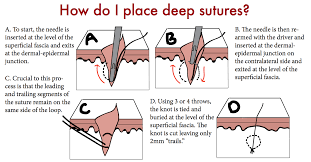
I watched the whole sewing-up process; stuff like that doesn’t bother me, and I was especially interested in the internal suturing and VERY happy the doc was well trained in trauma. My wound was exceptionally deep (to the bone) and eight inches long — such a bizarre accident.

I’m surprised the internal sutures didn’t pop open because I didn’t pay very much attention to doctor’s instructions about not walking or putting weight on my leg or avoiding physical activities for a month.

Did I learn anything from that unfortunate experience? Did I stop running down the stairs in slippery socks? Actually, I DID, and I’ve continued to be slightly more careful because I definitely don’t want a repeat performance of that fateful day.

It’s an anniversary date that I won’t soon forget. I saved all the photos that I took when it happened and while I was in the ER. They’re constant reminders that life can change in the blink of an eye but those pics are too graphic and scary to share. (You’re welcome.)

I’m no stranger to accidents like the time I ran up the hill at sunset because I heard a coyote, and slipped and fell in the ditch. I broke a bone in my wrist — another completely avoidable incident. I think I finally learned the lesson. Well, maybe. Only time will tell.

Read the full stories here: https://enchantedseashells.com/2024/01/21/tales-of-the-er/
https://enchantedseashells.com/2013/07/09/slip-fall-break/

When Your Gallbladder Isn’t Your Friend

GALL…

Of all the unmitigated gall!” “He sure has a lot of gall!”

Have you heard that? My mom used to say it about certain people. I don’t think it’s used very much now, but it still has a relevant place in our language.

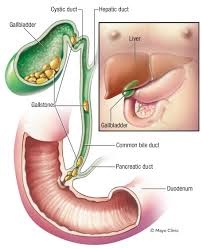
Gall is a digestive juice secreted by the liver, stored in the gallbladder, and aids in the digestion of fats. vocabulary.com

If someone has gall, they’re irritating. In fact, as a verb, gall means “to irritate” like new tight jeans that gall your thighs. Gall is “bile,” too, like what’s in a gall bladder. Back in the days of Hippocrates, if the four humors of the body were out of whack, it affected your spirits. If you had too much bile, or gall, then you’d be aggressive or depressed. It’s also a noun for “deep feeling of ill will.”

I’m reminded of this because I’m on my way for a yearly ultrasound to check on the status of a growth on my gallbladder.

Prior to my first ultrasound, I experienced right upper quadrant abdominal pain and that’s how I initially learned about the cyst/polyp.

Adenomyomatosis: An abnormal overgrowth of the gallbladder lining that forms cysts in the gallbladder wall. Scientists aren’t sure why it occurs, but it isn’t usually harmful.

So far (knock on wood), it hasn’t really changed size enough to cause alarm, but my doctor asked me why I haven’t had it removed. She thought it was easier to have it removed than to monitor it on a yearly basis.

No one had suggested that before, especially since it hasn’t reached the size protocol for removal. I’m also thinking that if I did that, it could grow back and anything invasive seems to increase the probability of creating something new and different and perhaps even malignant.

I told her my prudent course of action is to continue to get a yearly ultrasound and if stays the same, to continue to do nothing. I don’t believe in slicing and dicing my body parts unless it’s a thousand percent medically necessary.

Waiting for the ultrasound report is always stressful and I hope when it finally gets emailed to me, it’ll reveal no significant change in size or location to the little cyst valiantly clinging to my gallbladder wall — which would be great news and I’ll be able to stop worrying about it — until next year.

Wetiko: Disease of The Soul

Paul Levy writes: “Wetiko is a virus of the mind that cultivates and feeds on fear and separation.”

I lost a few followers here on WordPress since the US presidential election. I guess some people don’t like my absolute hatred for that orange POS, but it’s never been a secret how I feel about repression and criminal behavior and loss of reproductive rights, oh well…I’m grateful they chose to delete themselves. We are not the same.

Along with the results of the election where the decent candidate, Kamala Harris, conceded her apparent loss, there’s been an uptick in chat about wetiko. I’ve written about it before but now theres a resurgence of interest in anything that could possibly explain the toxic world we inhabit.

Wetiko is a disease of the soul, a parasite of the mind, currently being acted out en masse on the world stage via a collective psychosis of titanic proportions.

This mind-virus-which Native Americans have called “wetiko”-covertly operates through the unconscious blind spots in the human psyche, rendering people oblivious to their own madness and compelling them to act against their own best interests.

Drawing on insights from Jungian psychology, shamanism, alchemy, spiritual wisdom traditions, and personal experience, author Paul Levy shows us that hidden within the venom of wetiko is its own antidote, which once recognized can help us wake up and bring sanity back to our society.

A Tibetan Buddhist practitioner for more than thirty years, he has intimately studied with some of the greatest spiritual masters of Tibet and Burma.

“For millennia, humanity has struggled to understand the manifestation of evil in our world. In this regard Dispelling Wetiko is an extraordinary book, and author Paul Levy has made a great contribution to our understanding of the evil that is happening in our world today, as well as who and what we are.” says Hank Wesselman PhD., anthropologist and author of The Bowl of Light Previously reviewed here: https://enchantedseashells.com/2022/12/15/what-im-reading-the-bowl-of-light/

Wetiko in a Nutshell

by Paul Levy, author of Wetiko: Healing the Mind-Virus That Plagues Our World

A contagious psycho-spiritual disease of the soul is currently being acted out en masse on the world stage via an insidious collective psychosis of titanic proportions. This mind-virus—which Native Americans have called “wetiko”—covertly operates through the unconscious blind spots in the human psyche, rendering people oblivious to their own madness and compelling them to act against their own best interests. Wetiko is a psychosis in the true sense of the word, “a sickness of the spirit.” Wetiko covertly influences our perceptions so as to act itself out through us while simultaneously hiding itself from being seen.

Wetiko bewitches our consciousness so that we become blind to the underlying, assumed viewpoint through which we perceive, conjure up, and give meaning to our experience of both the world and ourselves. This psychic virus can be thought of as the “bug” in “the system” that informs and animates the madness that is playing out in our lives, both individually and collectively, on the world stage.

Before being able to treat this sickness that has infected us all, we have to snap out of our denial, see the disease, acknowledge it, name it, and try to understand how it operates so as to ascertain how to deal with it—this is what my book Wetiko is all about.

The Normalization of Wetiko

A few years ago I ran into a friend whom I hadn’t seen for a while. He asked me what I had been up to. I answered that I was writing about the collective psychosis that our species had fallen into. His response was telling. He asked me what made me think there was a collective psychosis going on. His question left me speechless; I literally didn’t know how to respond. What made him think there wasn’t a collective psychosis going on, I wondered. Could he give me one piece of evidence? Our collective madness had become so normalized that most people—my friend was extremely bright, by the way—didn’t even notice.

Many of us have become conditioned to thinking that if we were in a middle of a collective psychosis it would mean that people would be doing all sorts of “crazy” things such as running around naked and screaming, for instance. This ingrained idea, however, gets in the way of recognizing the very real collective insanity in which all of us are—both passively and actively—participating. If we want to envision what a collective psychosis could actually look like, it might be a real eye-opener to realize it would look exactly like what is happening right now in our world.

What Is Wetiko Really?

Wetiko is a cannibalizing force driven by insatiable greed, appetite without satisfaction, consumption as an end in itself, and war for its own sake, against other tribes, species, and nature, and even against the individual’s own humanity. It is a disease of the soul, and being a disease of the soul, we all potentially have wetiko, as it pervades and “in-forms” the underlying field of consciousness. Any one of us at any moment can fall into our unconscious and unwittingly become an instrument for the evil of wetiko to act itself out through us and incarnate in our world. If we see someone who seems to be taken over by wetiko and we think they have the disease and we don’t, in seeing them as separate we have fallen under the spell of the virus ourselves.

Wetiko induces in us a proclivity to see the source of our own pathology outside of ourselves—existing in “the other.” Wetiko feeds off of polarization and fear—and terror—of “the other.” Seeing the world through a wetiko-inspired lens of separation/otherness enlivens what Jung calls “the God of Terror who dwells in the human soul,” and simultaneously plays itself out both within our soul and in the world at large. Wetiko subversively turns our “genius” for reality-creation against us in such a way that we become bewitched by the projective tendencies of our own mind.

Falling under wetiko’s spell, we become entranced by our own intrinsic gifts and talents for dreaming up our world in a way that not only doesn’t serve us, but rather is put at the service of wetiko (whose agenda is contrary to our own). Our creativity then boomerangs against us such that we hypnotize ourselves with our creative genius, which cripples our evolutionary potential. To the extent we are unconsciously possessed by the spirit of wetiko, it is as if a psychic tapeworm or parasite has taken over our brain and tricked us, its host, into thinking we are feeding and empowering ourselves while we are actually nourishing the parasite (a process which will ultimately kill its host—us).

In wetiko disease, something that is not us surreptitiously, beneath our conscious awareness, takes the place of and plays the role of who we actually are. Shape-shifting so as to cloak itself in our form, this mercurial predator gets under our skin and “puts us on” as a disguise. Miming ourselves, we become a copy, a false duplicate of our true selves. We are then truly playing out a real version of the imposter syndrome.

The Sickness of Exploitation

Wetiko is powerless to control our true nature, but it can control and manipulate this false identity that it sets up within us. When we fall under the sway of wetiko’s illusion, we simultaneously identify with who we are not, while dissociating from and forgetting who we actually are—giving away our power, not to mention ourselves, in the process.

Disconnecting from our own intrinsic agency, we open ourselves to be used, manipulated, and exploited by outside forces. Indigenous author Jack Forbes, who wrote the classic book about wetiko entitled Columbus and Other Cannibals, refers to wetiko as “the sickness of exploitation.” Wetiko can be conceived of as being an evil, cannibalistic, vampiric spirit that inspires people under its sway to take and consume another’s resources and life-force energy solely for their own profit, without giving anything of value back from their own lives. Wetiko thus violates the sacred law of reciprocity in both human affairs and the natural world as a whole.

The main channel of wetiko’s transmission is relational. It exists through our relationships with ourselves, each other, and the world at large. Like a vampire that can’t stand the light of day, the wetiko virus can’t stand to be illumined. However, in seeing how it covertly operates through our own consciousness, we take away its seeming independence, autonomy, and power over us, while at the same time empowering ourselves. The way the vampiric wetiko covertly operates within the human psyche is mirrored by the way it works in the outside world.

Jung never tired of warning us that the greatest danger threatening humanity today is the possibility that millions—even billions— of us can fall into our unconscious together in a collective psychosis, reinforcing each other’s madness in such a way that we become unwittingly complicit in creating our own destruction. When this occurs, humanity finds itself in a situation where we are confronted with—and battered by—the primal, primordial, and elemental forces of our own psyche.

The Internal Origins of Wetiko

The most depraved part of falling under the thrall of wetiko is that, ultimately speaking, it involves the assent of our own free will; no one other than ourselves is ultimately responsible for our situation. There is no objective entity called wetiko that exists outside of ourselves that can steal our soul—the dreamed-up phenomenon of wetiko tricks us into giving it away ourselves.

People under the sway of wetiko are implicated in and willingly subscribe to their own enslavement. They do this to the point that when offered the way out of the comfort of their prison they oftentimes react violently. They symbolically—and sometimes literally—try to kill the messenger who is showing them the path to freedom. Ultimately speaking, in wetiko disease we are not being infected by a physical, objectively existing virus outside of ourselves. Rather, the origin and genesis of the wetiko psychosis is endogenous; its roots are to be found within the human psyche. The fact that wetiko is the expression of something inside of us means that the cure for wetiko is likewise within us.

If we don’t understand that our current world crisis has its roots within and is an expression of the human psyche, we are doomed to unconsciously repeat and continually recreate endless suffering and destruction in increasingly amplified forms, as if we are having a recurring nightmare. In my language, the inner situation within ourselves is getting “dreamed up” into materialized form in, through, and as the world.

In waking life we are continually dreaming right beneath the threshold of consciousness, especially when we are under the influence of our unconscious complexes. In other words, when we are “under the influence” of our activated unconscious, we will unknowingly recreate our very inner landscape via the medium of the outside world. What can be more dreamlike than that?

Recognizing the correlation between the inner and the outer, between the micro and the macro, is the doorway into being able to see wetiko and wake up to the dreamlike nature that wetiko is simultaneously hiding and revealing depending on our point of view and level of awareness. Recognizing the connection between what is happening out in the world with what is taking place within our minds becomes a channel or secret doorway that leads beyond our merely personal psychological issues, empowering us to deal with the essential problem of our time.

To “heal wetiko,” which refers to a concept describing a deep-seated psychological pattern of greed, selfishness, and destructive behavior, according to author Paul Levy, you can focus on practices like increased self-awareness, shadow work, mindfulness, cultivating gratitude, connecting with community, and actively working to counter destructive behaviors by integrating your unconscious aspects and projecting positive intentions into the world; essentially, by consciously choosing compassion and generosity over self-serving actions. 

https://www.innertraditions.com/blog/wetiko-in-a-nutshell

Key aspects of healing wetiko:

  • Recognize and acknowledge wetiko within yourself: Pay attention to your thoughts, emotions, and behaviors where you might be acting out of greed, envy, or a desire to exploit others. 
  • Shadow work: Explore and integrate your shadow aspects, the parts of yourself that you might disown or project onto others. 
  • Mindfulness practice: Regularly practice mindfulness to observe your thoughts and emotions without judgment, allowing you to catch wetiko tendencies early on. 
  • Inner work through therapy or spiritual practices: Seek support from a therapist or engage in spiritual practices that encourage self-reflection and healing. 
  • Cultivate gratitude: Focus on the positive aspects of your life and express gratitude to shift your perspective away from negativity. 
  • Compassion and service to others: Actively seek opportunities to serve others and demonstrate compassion, counteracting the self-centered nature of wetiko. 
  • Community building: Surround yourself with supportive people who share similar values and encourage your growth. 

A Wasted Day

Seasonal allergies (rhinitis) are horrible this time of year and I can usually deal with it by taking Claritin, but yesterday the sneezing wouldn’t stop and I had to, albeit reluctantly, pop a Benadryl because nothing else worked.

I knew what that would mean… the day would be totally lost; completely wasted. I’m pretty sensitive to all meds, and for me, the affect of the antihistamine Diphenhydramine is similar to being so drunk and impaired that all I can do is sleep.

It didn’t take long before I began to feel numb and drowsy. I couldn’t keep my eyes open and slept the day away which I loathe doing; I hate to squander any second of a day, however, when my allergies get that bad, nothing else works.

When I finally woke up, my allergies were gone and so was my Saturday. There was nothing left to salvage.

It wasn’t nearly as devastating as that 1945 film, The Lost Weekend, about the desperate life of a chronic alcoholic as he’s followed through a four-day drinking bout, but I felt useless and unproductive, even guilty for doing absolutely nothing. It’s not an enjoyable feeling.