Rest In Peace Sophie Kinsella, Confessions of a Shopaholic

“…nothing haunts us like the things we didn’t buy.” Quote from Becky Bloomwood/Confessions

There’s sad news to report from the literary world.

Author Sophie Kinsella died yesterday. I didn’t know that she had been diagnosed with a glioblastoma in 2022, which is one of the deadliest and most aggressive types of brain cancer.

I loved all of her books and probably have read everything she’s ever written. The first two novels in the Shopaholic series were adapted for the 2009 film Confessions of a Shopaholic, starring Isla Fisher. It’s one of my all-time favorites.

“That moment. That instant when your fingers curl round the handles of a shiny, uncreased bag–and all the gorgeous new things inside it becomes yours. What’s it like? It’s like going hungry for days, then cramming your mouth full of warm buttered toast.” Becky Bloomwood/Confessions

Those who dismiss her books as merely frivolous rom-com or chick lit don’t take into consideration the amount of work and talent it takes to write great dialogue and create characters that come to life.

RIP Sopie Kinsella. She’s survived by her husband and their five children.

And me? I’m still searching for that perfect green scarf. IYKYK

“You speak…PRADA?” Becky Bloomwood/Confessions

Here’s a trailer for the film, Confessions of a Shopaholic. I’m going to watch it again this weekend.

The End of Roses


She felt vaguely upset and unsettled.
She was suddenly tired
of outworn dreams.
And in the garden
the petals of the
last red rose
were scattered by
a sudden little wind.
Summer was over

— it was Autumn.

“She felt vaguely upset and unsettled. She was suddenly tired of outworn dreams.
And in the garden the petals of the last red rose were scattered by a sudden little wind. Summer was over — it was Autumn.” L.M. Montgomery

Rainbow Valley is the seventh book in the chronology of the Anne of Green Gables series of novels by Lucy Maud Montgomery.
Photos by Enchanted Seashells.

Word of The Day: Quiddity

It’s been a while since I posted about interesting and often archaic words that contribute to a fuller, richer vocabulary. Even though it’s been less than a year since that orange POS somehow took power, this country has turned into a shitshow of one horrible event after another and that seems to eclipse any sense of normalcy. 

Anyway…here’s one that’s quirky and will hopefully take our minds off this ugly reality for a minute or two.

Quiddity is such a great word: it’s the essence or unique nature that makes something the kind of thing it is and makes it different from any other.

Vague and not vague at the same time — I can sort of comprehend it only if I don’t allow my brain to delve too deeply into the intricacies of the meaning because then it becomes overwhelming and my mind takes off onto strange and faraway little tributaries. Sometimes it’s best not to overthink things.

From Shakespeare’s Hamlet, “Where be his quiddities now…?

To me: “Her passion for Leon Russell’s music is as much a quiddity as her curly hair.”

More examples:

“Many people share the quiddity of dipping their fries into their milkshakes.” which is a waste of a good milkshake and a good french fry.

For there is no knowledge of things insofar as they are external in effect, but insofar as their nature and quiddity is grasped by the mind.

When a politician avoids answering a question while pretending to answer it, he often does it using quiddity, or by bringing up irrelevant and distracting points.

Quiddity is a usefully sneaky tool if you want to evade an argument or question, and it’s often used by people like lawyers in court and teenagers angling for later curfews.

The noun quiddity has a philosophical meaning too, “the essential nature of something,” or the unique thing that makes it what it is. The Medieval Latin root, quidditas, translates literally as “whatness.”

I think we all need to incorporate quiddity into our daily language, written and verbal, don’t you?

Featured image from Pinterest

Beautiful Love

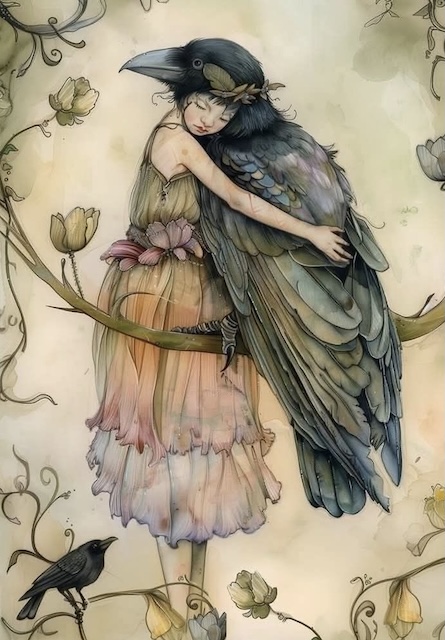
If I could hug my crow family, I would be so happy. The love of an animal is pure and sweet.

Jean Marie Lucien Pierre Anouilh was a French dramatist and screenwriter 1910-1987.
Curated from Rivers in the Ocean / Craft Kreatively

Non-Thought: Thought-terminating Clichés Are All Around  

This blog is exactly like my personality: random

One minute I’m searching for seashells or a rock that speaks to my heart or I’m reveling in a designer treasure found at the local consignment shop after a day protesting that orange POS and the fall of democracy, yet at the same time, on any given day, I’m a voracious reader, whether it’s chick lit or poetry or something that catches my eye on social media, all the while obsessing over Leon Russell, Master of Space and Time. There are definitely many tabs open on my laptop screen (and in my head).

Like this…thought-terminating clichés.

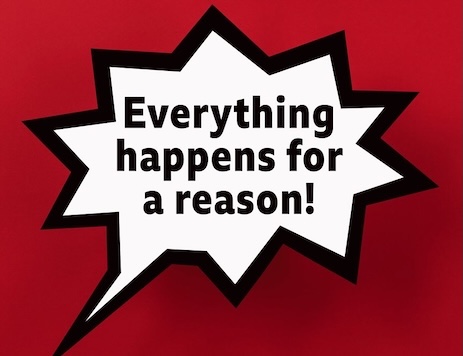
How many times have you heard this (or said it)? “Everything happens for a reason.” Did you find it helpful or frustrating? I find it frustrating and not helpful AT ALL. It makes me feel the person I’m talking to either doesn’t care about what I’m saying or is trying to act superior and patronizing.

For me, that attitude completely terminates the conversation. Sometimes I respond with “Does it really? Does everything REALLY happen for a reason?” but mostly I simply stop talking. There’s nowhere to go after that; for me It’s a convo-ender.

A thought-terminating cliché is a common saying or phrase used to shut down further critical thinking or debate about a topic. These phrases often present themselves as universally accepted truths or wisdom, discouraging deeper exploration or questioning. They can be used in various contexts, including conversations, debates, and even within workplaces or religious groups. 

The term was popularized by Robert Jay Lifton in his 1961 book Thought Reform and the Psychology of Totalism, who referred to the use of the cliché, along with “loading the language”, as “the language of non-thought”.

It’s also known as a semantic stop-sign, a thought-stopper, bumper sticker logic, or cliché thinking and is a form of loaded language—often passing as folk wisdom—intended to end an argument and quell cognitive dissonance with a cliché rather than a point. Some such clichés are not inherently terminating, and only becomes so when used to intentionally dismiss, dissent, or justify fallacies.

1. “It is what it is.” Used to dismiss any deeper inquiry into a situation or problem.

2. “You’ll figure it out.” Used to avoid helping or being asked for help. Condescending.

3. “Boys will be boys.” – Used to excuse or dismiss male behavior, often inappropriate or immature.

4. “Let’s agree to disagree.” Used to end a debate without resolving the underlying disagreement.

5. “Everything happens for a reason.” Used to shut down further questioning about why something occurred.

6.””Only time will tell.” Used to avoid making a decision or judgment about a situation.

7. “Such is life.” Used to dismiss the complexities or frustrations of a situation as being typical or unavoidable.

8. “What doesn’t kill you makes you stronger.”  Used to trivialize suffering or hardship without addressing its impact.

9. “God works in mysterious ways.”  Used to stop questions about religious or moral issues that are difficult to explain.

10. “It’s a free country.” Used to justify questionable actions or opinions without further discussion.

11. “You can’t win them all.” Used to discourage further effort or reflection after a failure or loss.

12. “Better safe than sorry.” Used to justify overly cautious behavior without considering the consequences of inaction.

13. “Everything in moderation.” Used to avoid discussing the nuances or dangers of certain behaviors or choices.

14. “That’s just your opinion.”  Used to dismiss someone’s perspective or argument without considering its merits.

15. “Let’s not rock the boat.” Used to discourage change or questioning of the status quo.

16. “This is the way we’ve always done it.” Used to resist change or new ideas without considering their potential benefits.

17. “Time heals all.” Completely puts a stop to any discussion that isn’t in agreement.

To transform thought-terminating clichés into conversation catalysts, we can create alternative phrases or questions that encourage further exploration and dialogue.

Here are some antidotes, each designed to open up rather than shut down conversations:

  1. Instead of “It is what it is”:  Ask, “What factors have led to this situation, and how can they be addressed?”
  2. Instead of “Boys will be boys”:  Query, “What behaviors are we accepting, and why, and how can we foster more responsible actions?”
  3. Instead of “We agree to disagree”:  Suggest, “Let’s delve into our differing viewpoints to understand each other better.”
  4. Instead of “Everything happens for a reason”:  Pose, “What can we learn from this situation, and how might it influence our future choices?”
  5. Instead of “Only time will tell”:  Consider, “What potential outcomes can we anticipate, and how can we prepare for them?”
  6. Instead of “Such is life”:  Reflect, “How does accepting this situation impact us, and are there aspects we can change or influence?”
  7. Instead of “What doesn’t kill you makes you stronger”:  Explore, “What challenges are we facing, and how can we grow or learn from them?”
  8. Instead of “God works in mysterious ways”:  Ask, “How can we find meaning or understanding in this situation?”
  9. Instead of “It’s a free country”:  Discuss, “How do our individual actions impact others, and where do we draw the line between freedom and responsibility?”
  10. Instead of “You can’t win them all”:  Consider, “What can we learn from this loss, and how can it inform our future efforts?”
  11. Instead of “Better safe than sorry”:  Ponder, “What are the risks and benefits of our choices, and how do we balance caution with opportunity?”
  12. Instead of “Everything in moderation”:  Question, “How do we find a healthy balance, and what does moderation look like in this context?”
  13. Instead of “That’s just your opinion”:  Offer, “I appreciate your perspective. Can you share more about how you arrived at this viewpoint?”
  14. Instead of “Let’s not rock the boat”:  Encourage, “What potential benefits and challenges could come from addressing this issue?”
  15. Instead of “This is the way we’ve always done it”:  Propose, “What new methods or ideas could we consider to improve this situation?”

Curated from desireebstephens.substack.com/p/the-power-of-silence-unpacking-thought, Wiki
A Grandma’s Mantra: “Read a book…” 📚

Back when the original Angel Boy began to walk and talk, my default response when the “I’m bored, I have nothing to do” complaints started, has always been, “Go read a book.”

Now I do the same thing to the grandkids, especially Angel Boy 2.0 who has become a wonderful reader.

Recently we were in a baseball card shop and he was TAKING LITERALLY FOREVER to look at cards and decide which ones he wanted to buy and figure out how much of HIS money he was willing to spend and how much he could get from me. That scenario brought up happy deja vu memories of his parsimonious dad at the same age. The thrifty apple didn’t fall too far from THAT tree, haha.

I walked outside, I walked back in, I pulled on his shirt and whined, “Are you almost done? I’M SO BORED!!”

Without skipping a beat, he said, “Hey Grandma, why don’t you go read a book!

And then he laughed and I laughed but I got the last laugh because that proved that he had really listened to me. A total win for Grandma!

I gotta confess though, I was SO BORED in that card shop, every minute seemed like an hour. Memories.

It’s really funny, because the original AB is NEVER without a book and leveraged that love of reading into a Yale PhD, writing his own book (published by a prestigious house), and tenure at a major uni, so I guess my annoying mantra helped guide his path to success.

Grandma’s Mantra:
📚 If you’re bored, read a book!
📚 If you have a minute before school starts, read a book!
📚 If you’re waiting for a doctor’s appointment, read a book!
📚 If you can’t think of anything productive to do, read a book!

Try my method; it really works!

📚

Midsummer Dreams: What Brings Joy?

“Here, beneath this tree, she had lain on her back in the sun and watched the butterflies. Part of her would linger there for ever: a footstep running tip-toe to the creek, the touch of her hand on a tree, the imprint of her body in the long grass. And perhaps one day, in after years, someone would wander there and listen to the silence, as she had done, and catch the whisper of the dreams that she had dreamt there, in midsummer, under the hot sun and the white sky.”
— Daphne du Maurier, Frenchman’s Creek.

Art by Lucy Campbell

Three of my favorites in one painting: a wolf, a raven, and trees. I’d love to curl up and hibernate in a mighty oak guarded by my beloved animal family — to dream of butterflies and seashells and other simple but profound bearers of joy.

Vintage San Diego: Bays, Bars, and Books

I don’t talk much about the part of Southern California where I live; other than my beach, lagoon, and the stupid local government. I’m about thirty or forty miles or so from the city, and while I don’t often get down there, I do love old pictures that chronicle the history of San Diego far more accurately than words.

Here’s a photo of San Diego Bay taken in 1892 from the vantage point of State Street and Broadway. It all looks calm and free of tourists, exactly how we locals like our life here in SoCal.

San Diego Bay / Photo from Reddit

I always thought the oldest bar in San Diego was the Waterfront, but it’s not, because the Waterfront opened in 1933 when prohibition was repealed, 

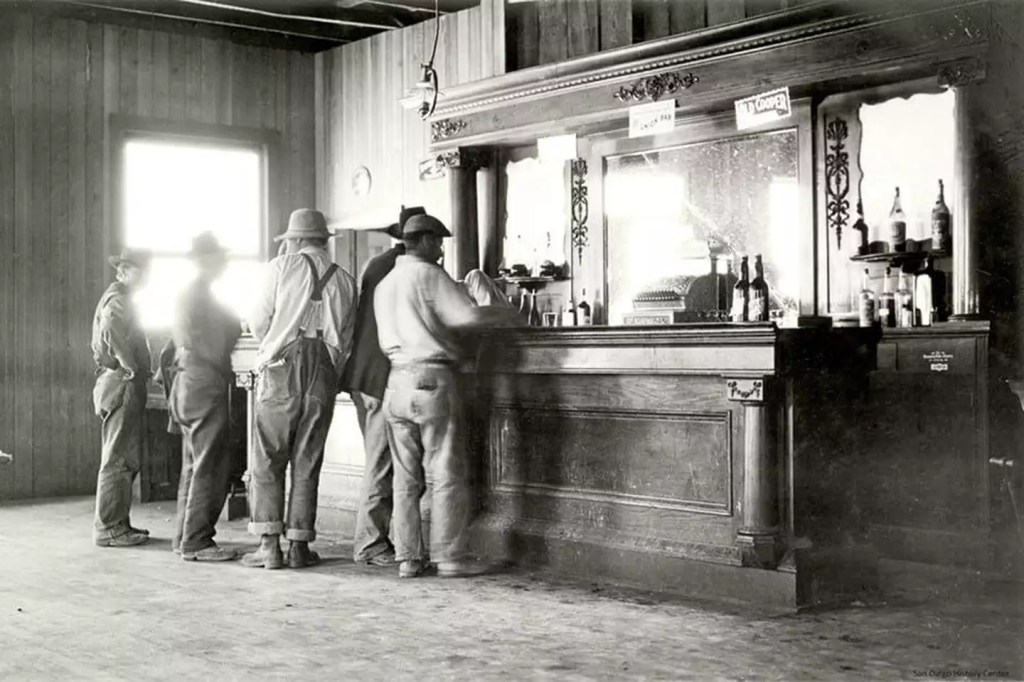
The oldest bar in San Diego is the Tivoli Bar, opened as a saloon in 1885. It’s located on a lot originally owned by Alonzo Horton who helped develop most of downtown San Diego.

Tivoli Bar/Curated from SFGate

Built in 1864, the building was first called the Walker House and functioned as a boarding house, feed store, and blacksmith shop. The Walker House was converted into a saloon and kitchen in 1885. The original bar (still there) was built in Boston and brought to San Diego by ship around Cape Horn at the southern tip of South America, a journey which took three to four months.

The original cash register from the turn of the 20th century and the old safe are still displayed in the bar.

The Tivoli Bar has hosted many famous characters including Wyatt Earp and his wife Josephine, whose photos are prominently displayed over the entrance to the bar, along with Frank Sinatra and Sophia Loren.

The bar flourished during a time when San Diego was a boomtown and the Gaslamp was the city’s red light district, an area then known as the Stingaree. A warning sign from the time reads: “This area is known to be populated by anarchists, confidence men, cut throats, shady ladies, hop heads, perverts and thieves.”

Here’s an 1882 crime report from a local newspaper: “About 8 o’clock on Friday evening, a fracas occurred in the Tivoli Saloon between Gus Young and one Ballantine, in which the former was struck over the head with a chair in such a forcible manner that the latter is of no further service, and will have to be sent to a furniture store for repairs.”

I bet there were some wild times inside the Tivoli–if only the walls could talk! It’s a certified dive bar and I can’t believe I’ve never been there. I think it’d be fun to take the train downtown and check it out.

Have you heard of reporter and author Max Miller?

Max Miller was a reporter for the San Diego Sun and author of twenty eight books. In 1932, he wrote I Cover the Waterfront, an interesting account of San Diego’s port community that inspired Hollywood movies and became the title of a jazz standard sung by Billie Holliday, Frank Sinatra, and Sarah Vaughan, but sadly, NOT Leon Russell.

The book’s characters include true-life sea captains, Portuguese fishermen, flying squid, sparkling Garibaldi fish, movie stars, Charles Lindbergh, Babe Ruth, and a beautiful young woman who got away.

Miller also drew from his experiences living in Everett, Washington and when he attended the University of Washington. He also wrote Harbor of the Sun: The Story of the Port of San Diego, which is a fairly difficult book to locate. He died in La Jolla.

Here’s Sarah Vaughan with her 1946 version of I Cover The Waterfront (I couldn’t find a Leon Russell connection this time at all…LOL).


FYI: This is not a post written with the intention to extol any vacation virtues of San Diego. We REALLY have far too many visitors here but I’m sure there are other lovely places to choose for a holiday…

A Fairy Night

What an exquisite sentence…

 “And then, one fairy night, May became June.”

Quote from The Beautiful and Damned by F. Scott Fitzgerald
Art curated from Pinterest

Book Review | Leon Russell: The Master of Space and Time’s Journey Through Rock & Roll History

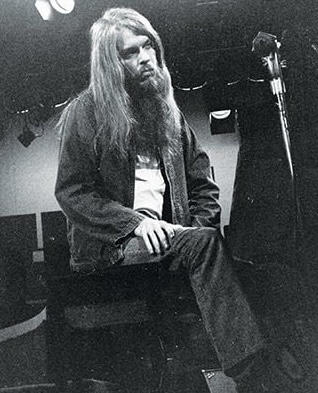
Written by Bill Janovitz, this nearly 600 page New York Times bestselling biography of Leon Russell, Leon Russell: The Master of Space and Time’s Journey Through Rock & Roll History was a gift from the original Angel Boy.

I don’t think he (or the Angel Kids) quite understand my passionate interest (read obsession) with the one and only Claude Russell Bridges (Leon Russell), but he’s supportive in his own way, although he wouldn’t play “A Song For You” on our piano because he said it had been too long since he tickled the ivories and it might have looked simple to play, but it was a very complex piece of music and he didn’t feel he could do it justice. Or at least that’s the excuse he gave me.

So…this BOOK. It’s comprehensive, it’s respectful, and it delves into areas of Leon’s life that even I didn’t know. Yes, there’s some sex, drugs, and rock and roll, but the overarching theme of Leon’s life and music is LOVE.

The life path that took a child born with cerebral palsy during the Second World War, who overcame his physical challenges to become a classically trained pianist — and was catapulted to the top of the music scene–is inspirational. He was and always will be the Master of Space and Time — a visionary.

One of my favorite quotes from the book is from his friend and fellow musician, Ann Bell:

“One night everybody had gone to bed, and it was about four o’clock in the morning. All of a sudden, I woke up; I could hear him playing. It was a classical piece; he’s in the living room, where he had a piano, and he’s playing this piece that’s forty minutes long, from memory. There was no sheet music. I sat down on the bench, and I didn’t say a word. I just thought, ‘They didn’t understand the depth of his well.’ And when he was done, I was crying. He goes, ‘Girl, what’s wrong witchoo?'”

From the Rock & Roll Hall of Fame:
The definitive New York Times bestselling biography of legendary musician, composer, and performer Leon Russell, who profoudly influenced George Harrison, the Rolling Stones, Eric Clapton, Elton John, Willie Nelson, Tom Petty, and the world of music as a whole. 

Leon Russell is an icon, but somehow is still an underappreciated artist. He is spoken of in tones reserved not just for the most talented musicians, but also for the most complex and fascinating. His career is like a roadmap of music history, often intersecting with rock royalty like Bob Dylan, the Stones, and the Beatles. He started in the Fifties as a teenager touring with Jerry Lee Lewis, going on to play piano on records by such giants as Frank Sinatra, The Beach Boys, and Phil Spector, and on hundreds of classic songs with major recording artists. Leon was Elton John’s idol, and Elton inducted him into the Rock and Roll Hall of Fame in 2011. Leon also gets credit for altering Willie Nelson’s career, giving us the long-haired, pot-friendly Willie we all know and love today.

In his prime, Leon filled stadiums on solo tours, and was an organizer/performer on both Joe Cocker’s revolutionary Mad Dogs and Englishmen tour and George Harrison’s Concert for Bangladesh. Leon also founded Shelter Records in 1969 with producer Denny Cordell, discovering and releasing the debut albums of Tom Petty, the Gap Band, Phoebe Snow, and J.J. Cale. Leon always assembled wildly diverse bands and performances, fostering creative and free atmospheres for musicians to live and work together. He brazenly challenged musical and social barriers. However, Russell also struggled with his demons, including substance abuse, severe depression, and a crippling stage fright that wreaked havoc on his psyche over the long haul and at times seemed to will himself into obscurity. Now, acclaimed author and founding member of Buffalo Tom, Bill Janovitz shines the spotlight on one of the most important music makers of the twentieth century.

I give this book all the stars ⭐⭐⭐⭐⭐⭐ and tophats 🎩🎩🎩🎩🎩🎩🎩🎩

In my opinion, if you don’t know who Leon Russell was, you should, and reading Janovitz’s biography is a good way to learn about him and to be amazed at his musical genius. You’ll understand why he’s referred to as the Master of Space and Time.

Leon Russell and the GAP band on The Midnight Special with Wolfman Jack: