The End of Roses


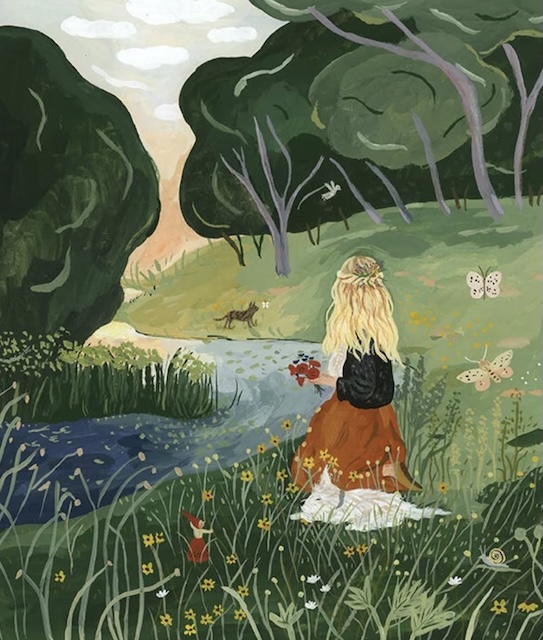
She felt vaguely upset and unsettled.
She was suddenly tired
of outworn dreams.
And in the garden
the petals of the
last red rose
were scattered by
a sudden little wind.
Summer was over

— it was Autumn.

“She felt vaguely upset and unsettled. She was suddenly tired of outworn dreams.
And in the garden the petals of the last red rose were scattered by a sudden little wind. Summer was over — it was Autumn.” L.M. Montgomery

Rainbow Valley is the seventh book in the chronology of the Anne of Green Gables series of novels by Lucy Maud Montgomery.
Photos by Enchanted Seashells.

Time As a Construct

Lately, I’ve been thinking about T-I-M-E. Time flies. I hate to be late; I like to be ON TIME. Does time really exist at all or have we been brainwashed to think iit does?

Too much thinking about time as ephemeral makes me anxious. Too much thinking about anything does the same thing. My non-logical mind has determined that TIME itself isn’t the issue; THINKING about it IS and it makes my brain melt, just like Dali’s clocks.

Salvador Dalí

 “Time doesn’t exist, clocks exist. Time is just an agreed upon construct.”
— David Foster Wallace

“It takes just one unattended moment for an hour to pass.”
― Sherod Santos, Square Inch Hours: Poems

Santos was born in South Carolina, graduated from San Diego State University, and studied at the University of California, Irvine. I never met him when I attended SDSU, but I knew ABOUT him; all of us who studied creative writing and poetry knew about “Rod” Santos and W.S. Merwin and Glover Davis, who was actually my professor.

David Foster Wallace was an acclaimed American writer known for his fiction, nonfiction, and critical essays that explored the complexities of consciousness, irony, and the human condition. Wallace wrote the novel Infinite Jest.

“The Persistence of Memory” is an iconic 1931 surrealist oil painting by Salvador Dalí, famous for its “melting” clocks draped over a desolate, dream-like landscape inspired by his Catalonian home. The painting uses a paranoiac-critical method to explore the subconscious, with the distorted clocks symbolizing the fluidity and subjectivity of time, influenced by Freudian psychology and potentially Einstein’s theory of relativity. From Google.

Could Leon Russell’s version of As Time Goes By be the best ever? I think so…mature Leon was awesome, too.

Word of The Day: Quiddity

It’s been a while since I posted about interesting and often archaic words that contribute to a fuller, richer vocabulary. Even though it’s been less than a year since that orange POS somehow took power, this country has turned into a shitshow of one horrible event after another and that seems to eclipse any sense of normalcy. 

Anyway…here’s one that’s quirky and will hopefully take our minds off this ugly reality for a minute or two.

Quiddity is such a great word: it’s the essence or unique nature that makes something the kind of thing it is and makes it different from any other.

Vague and not vague at the same time — I can sort of comprehend it only if I don’t allow my brain to delve too deeply into the intricacies of the meaning because then it becomes overwhelming and my mind takes off onto strange and faraway little tributaries. Sometimes it’s best not to overthink things.

From Shakespeare’s Hamlet, “Where be his quiddities now…?

To me: “Her passion for Leon Russell’s music is as much a quiddity as her curly hair.”

More examples:

“Many people share the quiddity of dipping their fries into their milkshakes.” which is a waste of a good milkshake and a good french fry.

For there is no knowledge of things insofar as they are external in effect, but insofar as their nature and quiddity is grasped by the mind.

When a politician avoids answering a question while pretending to answer it, he often does it using quiddity, or by bringing up irrelevant and distracting points.

Quiddity is a usefully sneaky tool if you want to evade an argument or question, and it’s often used by people like lawyers in court and teenagers angling for later curfews.

The noun quiddity has a philosophical meaning too, “the essential nature of something,” or the unique thing that makes it what it is. The Medieval Latin root, quidditas, translates literally as “whatness.”

I think we all need to incorporate quiddity into our daily language, written and verbal, don’t you?

Featured image from Pinterest

I Am Feral

Today’s mood…

In my mind I am always the feral woman wearing a white nightdress with a mud-stained hem and twigs in my hair, running through a forest bathed in moonlight, screeching along with the owls and foxes.

Unknown, curated from She’s Magic & Midnight Lace
Image from Pinterest

The Bluebird Promise

As long as there are bluebirds, there will be miracles and a way to find happiness.

Quote curated from Pinterest: Credit to the writer.
Art by Ida Rentoul Outwaite

Non-Thought: Thought-terminating Clichés Are All Around  

This blog is exactly like my personality: random

One minute I’m searching for seashells or a rock that speaks to my heart or I’m reveling in a designer treasure found at the local consignment shop after a day protesting that orange POS and the fall of democracy, yet at the same time, on any given day, I’m a voracious reader, whether it’s chick lit or poetry or something that catches my eye on social media, all the while obsessing over Leon Russell, Master of Space and Time. There are definitely many tabs open on my laptop screen (and in my head).

Like this…thought-terminating clichés.

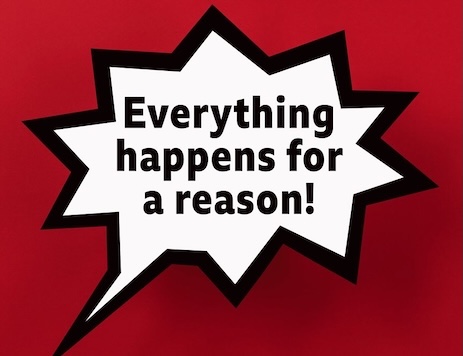
How many times have you heard this (or said it)? “Everything happens for a reason.” Did you find it helpful or frustrating? I find it frustrating and not helpful AT ALL. It makes me feel the person I’m talking to either doesn’t care about what I’m saying or is trying to act superior and patronizing.

For me, that attitude completely terminates the conversation. Sometimes I respond with “Does it really? Does everything REALLY happen for a reason?” but mostly I simply stop talking. There’s nowhere to go after that; for me It’s a convo-ender.

A thought-terminating cliché is a common saying or phrase used to shut down further critical thinking or debate about a topic. These phrases often present themselves as universally accepted truths or wisdom, discouraging deeper exploration or questioning. They can be used in various contexts, including conversations, debates, and even within workplaces or religious groups. 

The term was popularized by Robert Jay Lifton in his 1961 book Thought Reform and the Psychology of Totalism, who referred to the use of the cliché, along with “loading the language”, as “the language of non-thought”.

It’s also known as a semantic stop-sign, a thought-stopper, bumper sticker logic, or cliché thinking and is a form of loaded language—often passing as folk wisdom—intended to end an argument and quell cognitive dissonance with a cliché rather than a point. Some such clichés are not inherently terminating, and only becomes so when used to intentionally dismiss, dissent, or justify fallacies.

1. “It is what it is.” Used to dismiss any deeper inquiry into a situation or problem.

2. “You’ll figure it out.” Used to avoid helping or being asked for help. Condescending.

3. “Boys will be boys.” – Used to excuse or dismiss male behavior, often inappropriate or immature.

4. “Let’s agree to disagree.” Used to end a debate without resolving the underlying disagreement.

5. “Everything happens for a reason.” Used to shut down further questioning about why something occurred.

6.””Only time will tell.” Used to avoid making a decision or judgment about a situation.

7. “Such is life.” Used to dismiss the complexities or frustrations of a situation as being typical or unavoidable.

8. “What doesn’t kill you makes you stronger.”  Used to trivialize suffering or hardship without addressing its impact.

9. “God works in mysterious ways.”  Used to stop questions about religious or moral issues that are difficult to explain.

10. “It’s a free country.” Used to justify questionable actions or opinions without further discussion.

11. “You can’t win them all.” Used to discourage further effort or reflection after a failure or loss.

12. “Better safe than sorry.” Used to justify overly cautious behavior without considering the consequences of inaction.

13. “Everything in moderation.” Used to avoid discussing the nuances or dangers of certain behaviors or choices.

14. “That’s just your opinion.”  Used to dismiss someone’s perspective or argument without considering its merits.

15. “Let’s not rock the boat.” Used to discourage change or questioning of the status quo.

16. “This is the way we’ve always done it.” Used to resist change or new ideas without considering their potential benefits.

17. “Time heals all.” Completely puts a stop to any discussion that isn’t in agreement.

To transform thought-terminating clichés into conversation catalysts, we can create alternative phrases or questions that encourage further exploration and dialogue.

Here are some antidotes, each designed to open up rather than shut down conversations:

  1. Instead of “It is what it is”:  Ask, “What factors have led to this situation, and how can they be addressed?”
  2. Instead of “Boys will be boys”:  Query, “What behaviors are we accepting, and why, and how can we foster more responsible actions?”
  3. Instead of “We agree to disagree”:  Suggest, “Let’s delve into our differing viewpoints to understand each other better.”
  4. Instead of “Everything happens for a reason”:  Pose, “What can we learn from this situation, and how might it influence our future choices?”
  5. Instead of “Only time will tell”:  Consider, “What potential outcomes can we anticipate, and how can we prepare for them?”
  6. Instead of “Such is life”:  Reflect, “How does accepting this situation impact us, and are there aspects we can change or influence?”
  7. Instead of “What doesn’t kill you makes you stronger”:  Explore, “What challenges are we facing, and how can we grow or learn from them?”
  8. Instead of “God works in mysterious ways”:  Ask, “How can we find meaning or understanding in this situation?”
  9. Instead of “It’s a free country”:  Discuss, “How do our individual actions impact others, and where do we draw the line between freedom and responsibility?”
  10. Instead of “You can’t win them all”:  Consider, “What can we learn from this loss, and how can it inform our future efforts?”
  11. Instead of “Better safe than sorry”:  Ponder, “What are the risks and benefits of our choices, and how do we balance caution with opportunity?”
  12. Instead of “Everything in moderation”:  Question, “How do we find a healthy balance, and what does moderation look like in this context?”
  13. Instead of “That’s just your opinion”:  Offer, “I appreciate your perspective. Can you share more about how you arrived at this viewpoint?”
  14. Instead of “Let’s not rock the boat”:  Encourage, “What potential benefits and challenges could come from addressing this issue?”
  15. Instead of “This is the way we’ve always done it”:  Propose, “What new methods or ideas could we consider to improve this situation?”

Curated from desireebstephens.substack.com/p/the-power-of-silence-unpacking-thought, Wiki
Word of the Day: Yutori

The concept of yutori speaks to me, especially right now in this scary political climate of gestapo-like kidnappings, Alligator Auschwitz, and a real sense of anticipatory dread.

“Yutori” (ゆとり) is a Japanese concept that broadly translates to spaciousness, room, or breathing room. 

It’s about creating intentional space in one’s life, both physically and mentally, to allow for relaxation, reflection, and a sense of ease. 

This can involve anything from leaving for appointments early to allow for a buffer, to simply taking moments throughout the day to pause and breathe

Yutori aligns with mindfulness practices and encourages a more balanced and less stressful approach to life. For me, that means going outside, watching a magnificent beachy sunset, cleaning the house, thoughtfully organizing a drawer — or my massive seashell collection.

Surfer Girl

I updated this post to honor the life and genius of the Beach Boys Brian Wilson. You can’t write about a surfer girl without that song in your head, right? Listen to Surfer Girl at the end ⬇️

Riding the waves, enchanted fairy-girl style…

A girl adrift, where sunlight streams,
Through liquid glass, a world of dreams.
She dances free, a silver thread,
In currents soft, where fishes fed.
The water whispers, soft and low,
As gentle eddies gently flow.
A world of wonder, cool and deep,
Where secrets sleep and shadows creep. 

Art: Ida Rentoul Outhwaite Poem: Author unknown

“Do you love me, do you, surfer girl?”

butterfly girl 🦋 metamorphosis

“Happiness is a butterfly, which when pursued,
is always just beyond your grasp,
but which, if you will sit down quietly,
may alight upon you.”

Nathaniel Hawthorne

🦋

Artwork by Elisabeth Ladwig (Elisabeth on Earth)

A Fairy Night

What an exquisite sentence…

 “And then, one fairy night, May became June.”

Quote from The Beautiful and Damned by F. Scott Fitzgerald
Art curated from Pinterest